
From Pressure to Peace of Mind
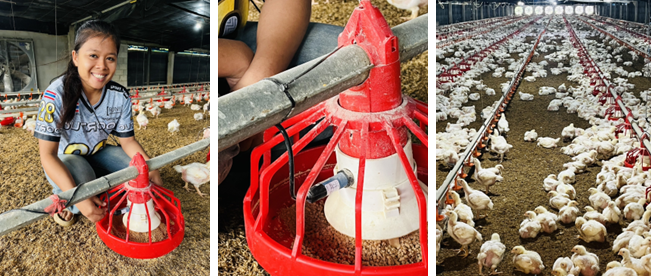
Since 2012, Baan Nam Pu Farm in Ratchaburi Province in Thailand has grown into one of the region’s premier poultry operations. With 40 broiler-houses and more than 100 staff, the farm’s scale is considerable. Supporting the core operationis its affiliated company, World Farm Supply, specialising in supplyingequipment for poultry and pig production.
In such a high-throughput environment, equipment reliability isn’t just convenient—it’s critical.

Before upgrading to DOL 26 sensors, Baan Nam Pu Farm depended on unbranded imported models that frequently malfunctioned. Their inconsistent performance created a chain reaction of problems throughout the broiler houses. At times, the sensors failed to recognize that feed levels were low, leaving pans empty and birds without access to feed. At other moments, they failed to signal the motors to stop, allowing feed to continue flowing until piles built up at the back of the house, creating both waste and unnecessary cleaning work.
These repeated failures forced workers to constantly monitor the feeding lines, stepping in manually whenever a sensor stopped doing its job. What should have been a smooth, automated process became a daily frustration—unpredictable, inefficient, and costly for a large-scale operation.

When the farm looked for a more robust sensing solution, dol-sensors’ DOL 26 stood out for several reasons:
All of this aligned with the farm’s need for fewer failures, simpler maintenance and predictable feed delivery.

At Baan Nam Pu Farm, the DOL 26 capacitive proximity sensors were deployed across a number of pan feeder systems. Key features of the implementation included.
Thanks to these capabilities, the farm achieved a sensor configuration that delivers reliable feed level detection, correct motor cycles, and minimal feed wastage.

After switching to the DOL 26 sensors, Baan Nam Pu Farm experienced an immediate transformation in daily operations. Feed distribution became consistent and predictable, eliminating the downtime that previously occurred when unreliable sensors failed to detect feed levels correctly. The motors now stop and start exactly as needed, preventing both empty pans and unnecessary feed piles.
With the feeding system running smoothly, the staff no longer spend their time chasing sensor errors or manually compensating for malfunctioning equipment. Instead, they can focus on essentialareas of bird management and house performance. The sense of relief among theteam is clear—what was once a source of constant worry has become an automatedprocess they trust every day.