In poultry production, major challenges rarely appear without warning.
Before performance is affected, before welfare concerns become visible, and before corrective action becomes urgent, there are often small signs that something is changing within the house.
A slight increase in humidity.
A gradual rise in CO₂ levels.
A small temperature fluctuation.
Viewed individually, these changes may seem insignificant. However, together they can provide valuable insight into the production environment and help identify potential issues before they develop into larger challenges.
A stable environment is essential for maintaining bird health, welfare, and production performance.
Temperature, humidity, and air quality all play an important role in how birds interact with their surroundings. When these factors remain within the desired range, birds can focus their energy on growth and production.
However, when environmental conditions begin to change, even slightly, birds may experience stress long before visible symptoms appear.
For example:
While each factor provides useful information on its own, the real value comes from understanding how they interact.
One of the biggest challenges in poultry management is distinguishing between normal variation and meaningful change.
A small increase in humidity may not be a concern by itself.
A slight rise in CO₂ may also seem manageable.
But when both occur simultaneously, they can indicate that ventilation performance is no longer optimal. This highlights the importance of viewing environmental conditions as part of a larger picture rather than as individual data points. Integrated monitoring helps producers understand not only what is changing, but also how different conditions may be influencing one another.
By identifying developing trends early, producers gain more time to investigate and respond before flock performance is affected.
Routine inspections remain a critical part of poultry management. However, modern poultry houses are dynamic environments where conditions can change throughout the day.
Continuous monitoring provides additional visibility into these changes.
Instead of relying solely on periodic observations, producers can monitor environmental conditions around the clock and identify trends that may otherwise go unnoticed.
This can support:
The goal is not simply to collect more data, but to transform that data into actionable insights.
To gain a complete understanding of house conditions, producers often need visibility into multiple environmental factors at the same time.
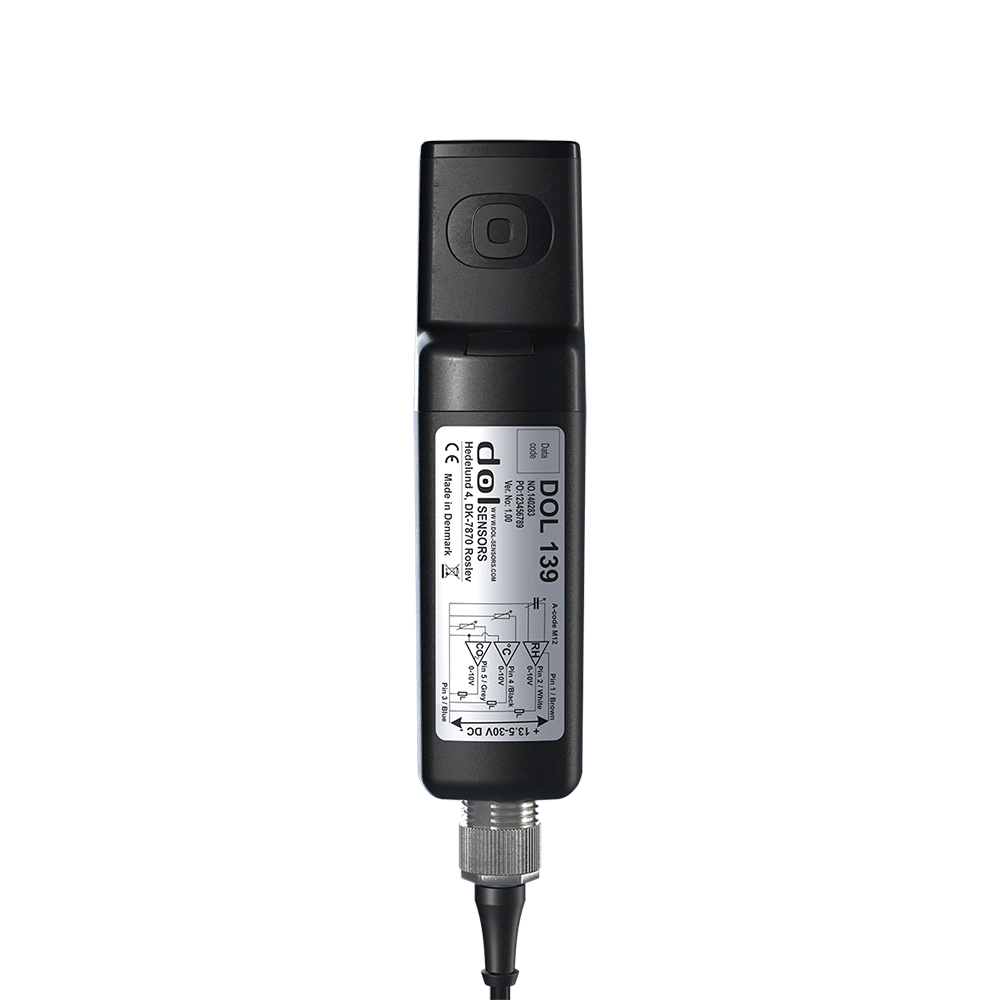
The DOL 139 combines temperature, humidity, and CO₂ monitoring in a single sensor solution, providing a comprehensive overview of key environmental conditions within the house.
By monitoring these parameters together, producers can more easily identify relationships between environmental changes and gain deeper insight into the overall production environment.
This supports a more proactive approach to flock management and helps create the conditions necessary for healthy and productive birds.
Production success is often determined long before visible problems emerge.
The ability to identify small environmental changes early can make a significant difference in both flock welfare and production performance.
While major challenges may seem to appear suddenly, they are often preceded by subtle signals that provide valuable opportunities for intervention.
Because in poultry production, the smallest changes often tell the biggest stories.