
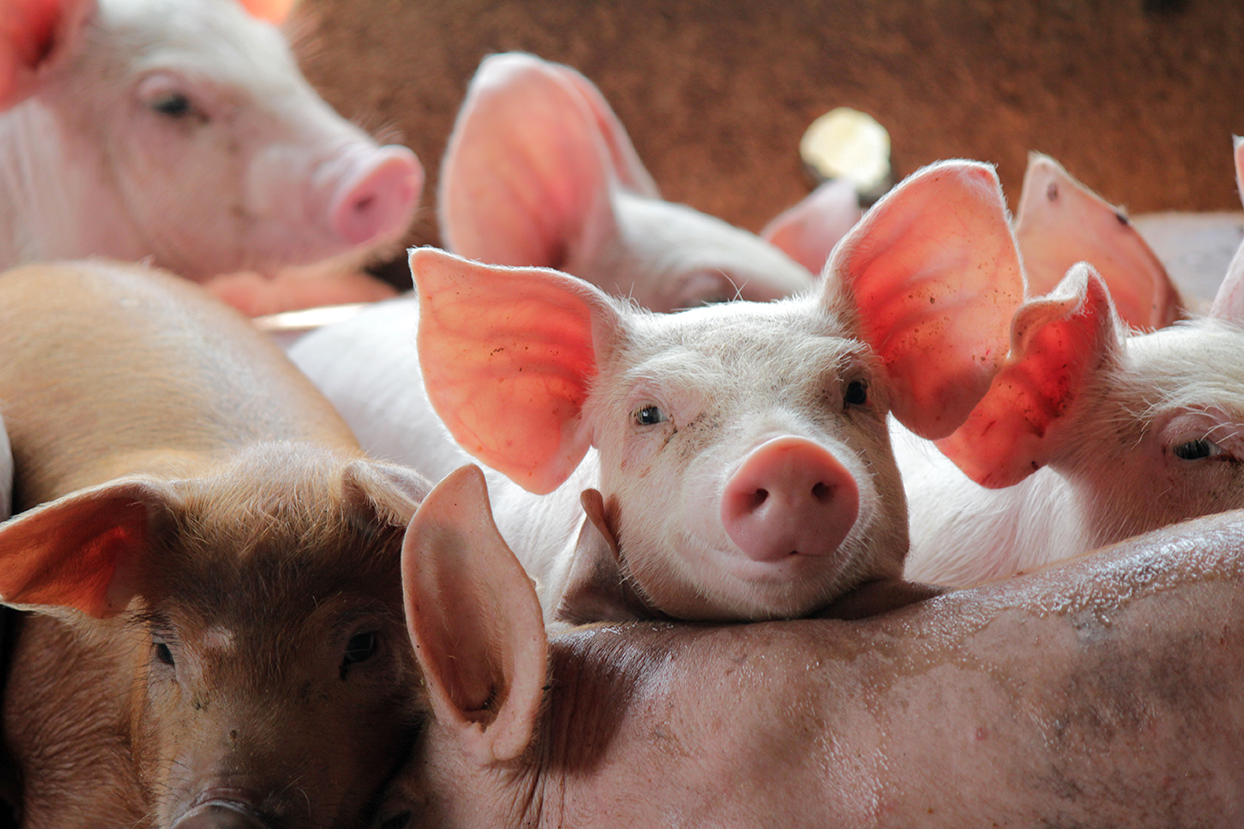
Pig production has come a long way from its humble beginnings. What started thousands of years ago with wild pigs foraging in forests has evolved into a high-tech, globally connected industry. Today, pork is the world’s most consumed meat, feeding billions and supporting millions of livelihoods. Yet this remarkable transformation also raises critical questions about sustainability, animal welfare, and the future of food production.
Pigs were among the first animals domesticated by humans — evidence suggests domestication began over 9,000 years ago in parts of Asia and Europe. Early farmers valued pigs for their adaptability, rapid reproduction, and ability to thrive on food scraps and farm by-products.
For centuries, pig rearing was small-scale and local, with families raising pigs for household consumption or small community markets.
These early systems were low-input and integrated into mixed farming, contributing to circular food economies long before the concept of “sustainability” existed.
The 20th century marked a turning point. Advances in genetics, nutrition, and disease control transformed pig farming into an industrial-scale enterprise. Countries such as China, the United States, Spain, and Brazil emerged as major producers, developing specialized breeding lines and modern housing systems to maximize efficiency.
Automation, biosecurity, and precision feeding technologies further boosted productivity, allowing producers to raise more pigs with fewer resources.
As a result, pork became a cornerstone of global agriculture — affordable, versatile, and accessible to a growing population.
Today’s pig farms bear little resemblance to those of the past. Many are highly sophisticated operations, equipped with climate-controlled housing, automated feeding, and real-time data monitoring systems.
Precision agriculture enables farmers to track growth rates, feed efficiency, and environmental impact with incredible accuracy.
This shift has made pig production one of the most technologically advanced sectors in livestock farming. Yet it has also brought new scrutiny.
As global production expands, so do the challenges. Sustainability, animal welfare, and antibiotic use are under increasing public and regulatory attention. Consumers are demanding transparency — wanting to know how animals are raised, what they eat, and how farms impact the planet.
To meet these expectations, producers are adopting practices such as:
Innovation is no longer just about production efficiency — it’s about producing more responsibly.
The next era of pig farming will likely focus on sustainability, resilience, and digital transformation. Smart farming tools, artificial intelligence, and genetic research are opening new frontiers — from climate-adaptive breeds to carbon-neutral production systems.
Meanwhile, shifts in consumer behavior — toward health, ethics, and environmental impact — are shaping how pork will be produced, processed, and marketed in the decades ahead.
Producers who embrace change and lead with transparency will be the ones defining the future of this essential industry.