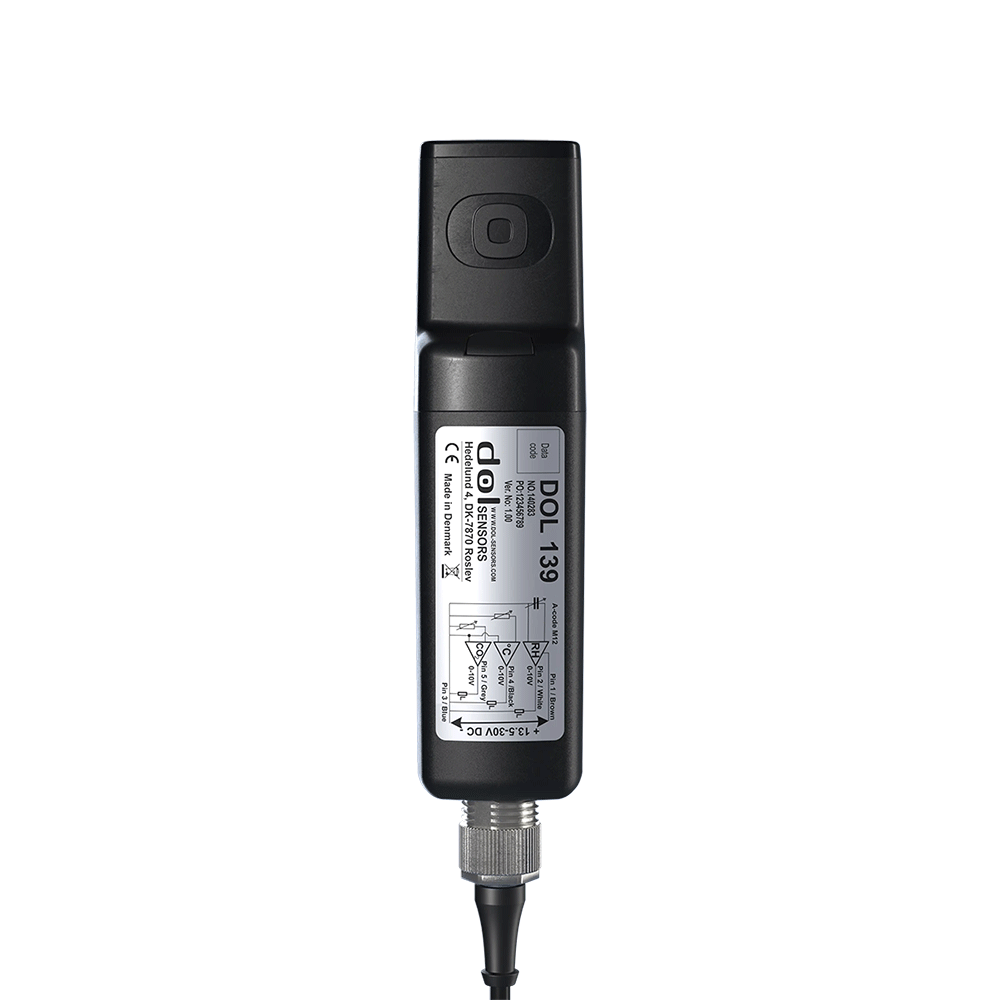
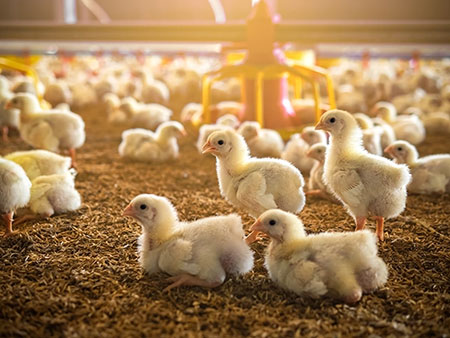
By optimizing the animal welfare in your poultry production, you will get a more profitable production. Factors such as the temperature, level of humidity and CO2 as well as the ammonia level are crucial to keep an eye on to ensure great animal welfare.
As most farmers and farm managers know, the well-being and health of chickens is easily influenced by the climate and amount of light in the livestock house making it vital to monitor this with sensors inside the livestock facility.
In livestock houses, sensors are constantly tested by high levels of humidity, temperature swings, and dust. Our sensors are specially designed to monitor these factors in livestock houses as their design is hardened to give the sensors longer service lives in the harsh environment.
Poultry production has evolved significantly over the past decades, driven by changes in technology, efficiency, and global demand.
The industry has become one of the fastest-growing sources of animal protein worldwide.
Read about the evolution of poultry production
Few issues in poultry farming generate as much discussion as housing systems. Should chickens be kept in cages or allowed to roam in free-range settings?
Each approach comes with its own benefits and drawbacks, and the decision often depends on how farmers balance efficiency, animal welfare, food safety, and consumer expectations.
Read our short article on the benefits and pitfalls of free-range and case sytems here.
Feed conversion ratio (FCR) is a key indicator of how efficiently birds turn feed into meat or eggs.
Understanding and improving FCR can help reduce feed costs, enhance productivity, and support more sustainable poultry production practices.
Read our article with tips for improving Feed Conversion Ratio here.