
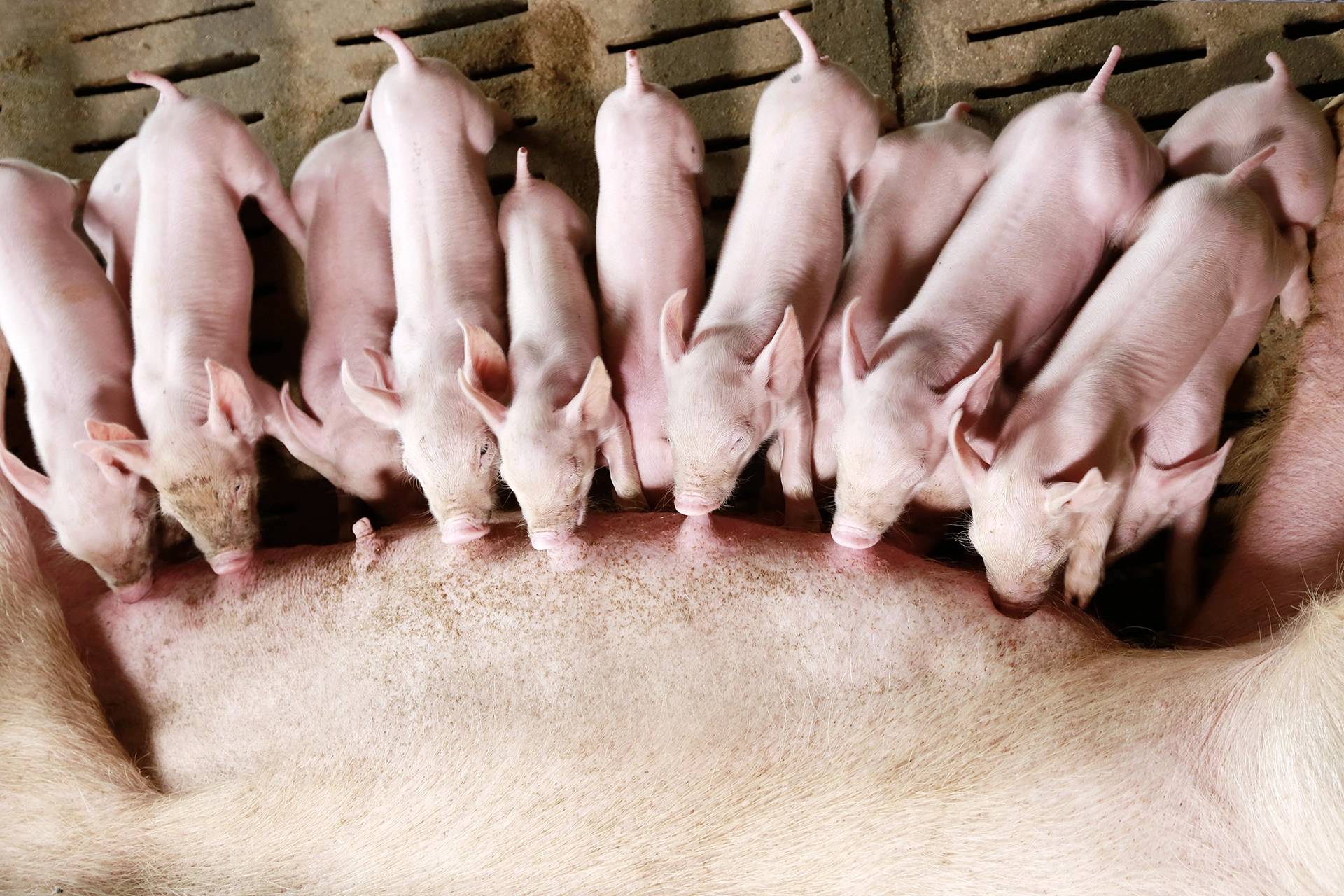
Early warnings in pig production help prevent costly losses

Early warnings in pig production help prevent costly losses

Pig production is currently under significant pressure across most regions of the world. Volatile pig prices and increasing requirements for animal welfare and sustainability are steadily eroding margins. At the same time, producers are expected to deliver consistent performance under conditions that are becoming more complex and less predictable.

For OEMs supplying equipment, systems and technology to the pig production industry, this creates a clear challenge: how to help customers maintain profitability and stability in an environment where small deviations in performance can quickly turn into substantial financial losses.

Disease pressure has reshaped global pig production

Disease outbreaks have been one of the most disruptive forces in pig production over the past decade. African Swine Fever (ASF), PRRS and other endemic diseases have had a measurable impact on global pork supply due to the sheer scale of production losses.

Between 2023 and 2025, global losses of slaughter pigs are estimated at 23–40 million animals annually, corresponding to approximately 1.8–2.8 percent of total global pig production. During the peak crisis period from 2019 to 2021, when ASF spread widely across Asia, annual losses rose dramatically to 45–70 million slaughter pigs, equivalent to 3.5–5.0 percent of global production.

These figures illustrate why disease prevention and early detection have moved from being operational concerns to becoming strategic priorities. Production losses on this scale have not only reduced supply but also contributed to increased price volatility, making revenue planning and long-term investment decisions significantly more difficult for producers.

Economic pressure amplifies the cost of late reactions

When margins are tight, the cost of reacting too late becomes disproportionately high. Disease, stress, suboptimal climate or feed changes rarely appear overnight. In most cases, performance deterioration starts gradually, through reduced feed intake, slower growth, increased variation or subtle behavioral changes.

However, these early signals are often missed in traditional production setups. Problems are typically detected only once mortality increases, feed conversion worsens or veterinary intervention becomes necessary. At that point, the financial damage has already occurred.

For OEMs, this raises a fundamental question: how can technology provide earlier insight into performance deviations, so corrective actions can be taken before losses accumulate?

Higher welfare expectations and reduced antibiotic use raise the bar

Consumer expectations are also changing rapidly. Across key markets, demand is growing for pork produced with higher animal welfare standards and minimal use of antibiotics. Retailers, processors and regulators increasingly require documentation to prove that welfare targets are being met and that antibiotic use is justified and controlled.

This development places additional pressure on producers to manage health proactively rather than reactively. Good welfare outcomes depend on stable environments, early intervention and consistent management, all of which benefit from better visibility into daily production performance.

For OEMs, the ability to support customers with data-driven insights that link welfare, health and productivity is becoming a critical differentiator.

No items found.

Labor shortages accelerate the need for automation and insight

The availability of skilled labor remains a major challenge in pig production worldwide. Fewer experienced stockpersons are responsible for larger units, reducing the time available for manual observation and increasing the risk that early warning signs go unnoticed.

As a result, producers are looking for technologies that can automate routine tasks and continuously monitor production without increasing labor requirements. Systems that can highlight deviations, prioritize attention and support decision-making are increasingly valued, especially when they can be integrated into existing facilities.

Because many producers are under financial pressure, there is limited appetite for large-scale rebuilds. Technologies that can be retrofitted into current production setups therefore have a clear advantage.

Regulatory pressure makes documentation unavoidable

In the EU in particular, environmental regulations are becoming stricter, with increasing expectations for documentation related to emissions, manure handling and overall environmental impact. Compliance is no longer just about meeting technical requirements, but also about being able to prove that systems are operated correctly and consistently.

This trend reinforces the need for digital solutions that can provide reliable documentation alongside operational benefits.

Why early warnings matter for OEMs

For OEMs, the risk is not only technical but also commercial. If problems in the barn are detected too late, customers suffer financial losses, confidence in the supplier declines, and long-term relationships are put at risk. In contrast, technologies that enable early warnings help customers protect margins, improve welfare outcomes and stabilize production.

Early insight into performance deviations allows producers to intervene before problems escalate. For OEMs, this shifts the value proposition from selling equipment to delivering measurable risk reduction and operational resilience.

In a market where customers are under constant pressure, helping them avoid losses is often more valuable than helping them increase output.

Selected Sensors

No items found.

Documents

English
Technical Information
Technical Note_Design Considerations for Camera-Based Pig Weighing