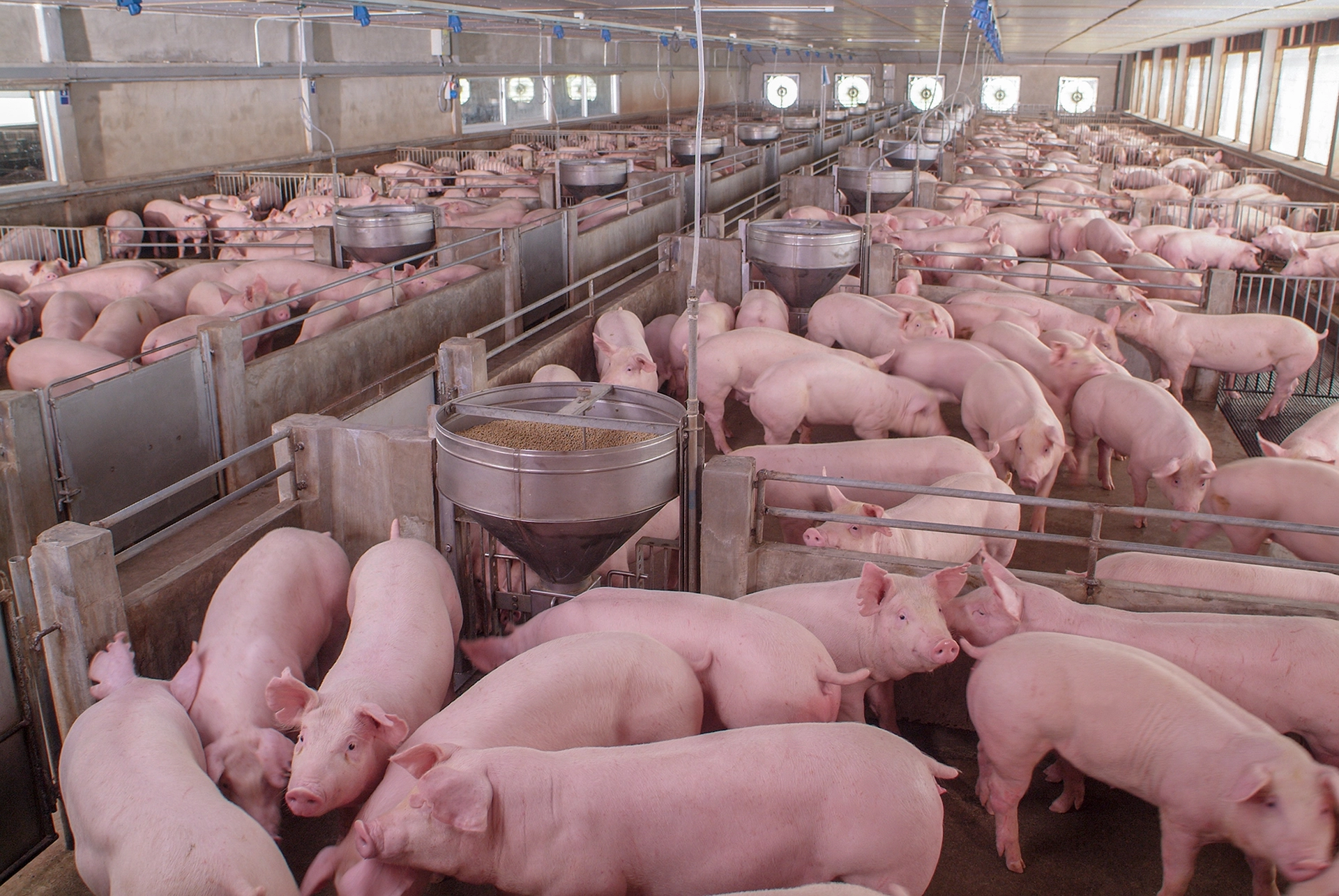
Why Standard Monitoring Doesn’t Always Fit Modern Pig Production

Every Pig Farm Has Its Own Challenges

Pig producers face a wide range of challenges every day.

Maintaining a stable climate, controlling energy consumption, ensuring animal welfare, and optimizing production performance all require reliable information from the barn. Sensors play a crucial role in providing that information.

While these challenges are shared across the industry, the way they appear on individual farms can vary significantly.

Differences in building design, ventilation strategies, production stages, management practices, and local conditions mean that no two pig operations are exactly alike.

When Standard Solutions Are Not the Right Fit

Most sensor solutions are designed to meet common industry needs, and for many applications, that works well.

However, pig production is becoming increasingly specialized. Differences in housing design, production systems, equipment layouts, and operational requirements mean that monitoring needs can vary significantly from one application to another.

In some cases, measurements need to be collected in a unique location. Existing equipment must be integrated with new technology. A system can require a particular output, communication protocol, or sensor configuration. While standard sensors often address many of these needs, they may not always provide the optimal fit.

The Cost of Compromise

As a result, producers, equipment manufacturers, and system integrators need to work around the limitations of a standard product. Additional components can be required, installations may become more complex, and valuable time can be spent adapting the system rather than focusing on production goals.

These compromises can seem minor, but over time they can reduce flexibility, make future upgrades more challenging, and increase the overall complexity of the solution.

What Does Mortality Really Cost a Pig Producer?
The impact of mortality extends far beyond the value of the animal. Discover how mortality influences production efficiency, resource utilization, and profitability throughout the production cycle.
No items found.

Finding the Right Fit

When monitoring requirements fall outside standard specifications, a more tailored approach may be needed.

Some applications require sensors with specific outputs or communication protocols. Others need adapted measurement ranges, housing designs, or integration with existing equipment. In these situations, the goal is not customization for its own sake, but to ensure the sensor supports the application as effectively as possible.

At dol-sensors,customized solutions start by understanding the challenge. Whether the need involves adapting an existing sensor or developing a more specialized configuration, the focus is on creating a solution that fits naturally into the overall system and provides reliable measurements in demanding agricultural environments.

By aligning the sensor with the application's specific requirements, producers, equipment manufacturers, and system integrators can gain the flexibility needed to support both current operations and future.

Conclusion

As pig production becomes increasingly specialized, monitoring requirements are becoming more diverse.

While standard sensor solutions continue to meet many common needs, some applications require a more tailored approach. By adapting sensor technology to specific operational requirements, producers, equipment manufacturers, and system integrators can create monitoring solutions that better fit their systems, support reliable data collection, and help meet the evolving demands of modern pig production.
生猪养殖中死亡率背后的隐性成本
Learn how continuous monitoring helps producers identify developing production challenges through changes in water consumption, growth performance and other key production indicators.

死亡率的评估往往为时已晚

当生产者评估生产绩效时,通常将死亡率视为一种结果。

死亡率是在批次结束、生猪已经损失之后才报告的。问题在于,死亡率往往被视为一种结果,而非一个过程。

事实上,死亡很少是突然发生的。

它往往是几天甚至几周前就开始的变化所导致的最终后果。当生产报告中显现出死亡率时,预防损失的机会可能早已错失。

‍

生产损失很少始于死亡。

了解持续监测如何帮助生产者更早发现问题。

→ 阅读: 持续监测如何实现生产问题的早期预警

避免生猪生产的高死亡率
Learn how continuous monitoring helps producers identify developing production challenges through changes in water consumption, growth performance and other key production indicators.

高死亡率是生猪生产中最严重的挑战之一。除了直接经济损失外,死亡率升高往往预示着与健康管理、住房条件、营养或生物安全有关的潜在问题。通过适当的规划、持续的监测和积极的管理,生猪生产者可以显著降低死亡率并保持牛群的健康、高产。

充足的通风和气候控制

为猪提供稳定舒适的室内气候对于减轻压力和预防疾病至关重要。适当的通风可以去除空气中多余的水分、二氧化碳、灰尘和有害气体,例如氨气,所有这些都会对呼吸系统健康产生负面影响。

猪特别容易受到热应力的影响。仔猪的冷应激会增加能量需求和对疾病的敏感性,而生长和育肥猪的热应激会减少饲料摄入量并削弱免疫功能。精心设计的通风系统有助于在整个生产周期中保持最佳温度和空气质量。

气候传感器为通风系统提供有关建筑物不同区域的温度、湿度、二氧化碳和氨含量的连续数据。这允许自动调整通风和供暖,确保条件保持一致并降低死亡风险。

传感器技术如何改变现代猪的生产
Learn how continuous monitoring helps producers identify developing production challenges through changes in water consumption, growth performance and other key production indicators.

精准畜牧业(PLF)已从利基概念转变为高性能生猪生产的核心战略。随着农场规模和劳动力越来越紧张,生产者越来越依赖自动化监控系统来维护动物福利、优化饲料效率并降低生产风险。

为什么传感器很重要

  • 持续监控 让生产者实时了解谷仓气候、饲料消耗量和水摄入量。
  • 早期发现 偏差(例如饮水量减少或温度升高)有助于防止疾病爆发和性能损失。
  • 数据驱动的决策 提高生产周期的一致性,减少对手动观察的依赖。

传感器产生最大影响的关键领域

  • 气候控制:监控温度、湿度、二氧化碳和氨气可确保稳定的条件,支持生长和减轻压力。
  • 饲料和水监测: 自动化系统可检测堵塞、泄漏或异常消耗模式。
  • 通风优化:传感器有助于平衡空气质量和能源效率。

Selected Sensors

No items found.

Documents

No items found.

Join our newsletter

Stay ahead in livestock production.

‍Join our newsletter and get industry insights, expert perspectives, and practical strategies for optimizing performance and efficiency.