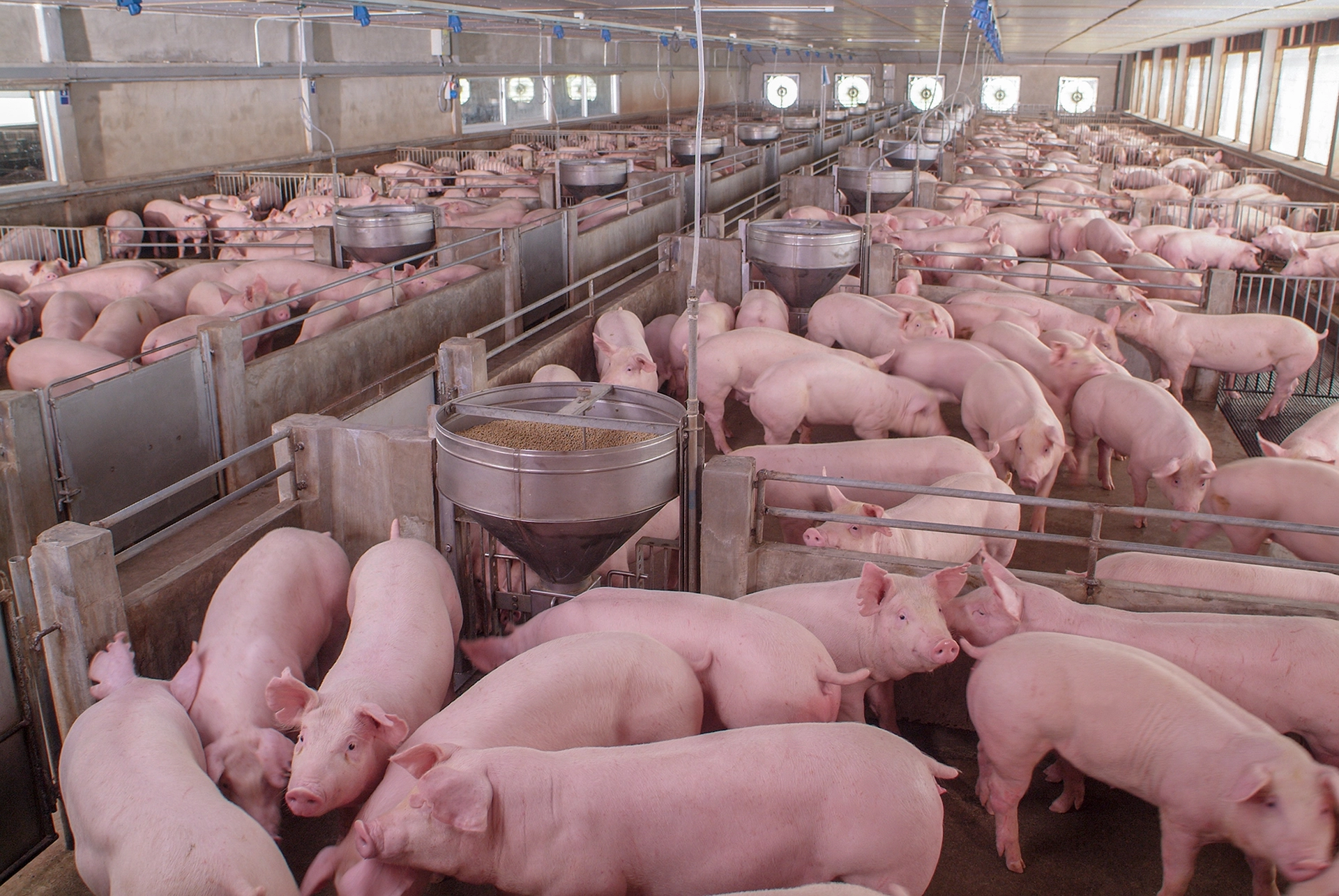
Why Standard Monitoring Doesn’t Always Fit Modern Pig Production

Every Pig Farm Has Its Own Challenges

Pig producers face a wide range of challenges every day.

Maintaining a stable climate, controlling energy consumption, ensuring animal welfare, and optimizing production performance all require reliable information from the barn. Sensors play a crucial role in providing that information.

While these challenges are shared across the industry, the way they appear on individual farms can vary significantly.

Differences in building design, ventilation strategies, production stages, management practices, and local conditions mean that no two pig operations are exactly alike.

When Standard Solutions Are Not the Right Fit

Most sensor solutions are designed to meet common industry needs, and for many applications, that works well.

However, pig production is becoming increasingly specialized. Differences in housing design, production systems, equipment layouts, and operational requirements mean that monitoring needs can vary significantly from one application to another.

In some cases, measurements need to be collected in a unique location. Existing equipment must be integrated with new technology. A system can require a particular output, communication protocol, or sensor configuration. While standard sensors often address many of these needs, they may not always provide the optimal fit.

The Cost of Compromise

As a result, producers, equipment manufacturers, and system integrators need to work around the limitations of a standard product. Additional components can be required, installations may become more complex, and valuable time can be spent adapting the system rather than focusing on production goals.

These compromises can seem minor, but over time they can reduce flexibility, make future upgrades more challenging, and increase the overall complexity of the solution.

What Does Mortality Really Cost a Pig Producer?
The impact of mortality extends far beyond the value of the animal. Discover how mortality influences production efficiency, resource utilization, and profitability throughout the production cycle.
No items found.

Finding the Right Fit

When monitoring requirements fall outside standard specifications, a more tailored approach may be needed.

Some applications require sensors with specific outputs or communication protocols. Others need adapted measurement ranges, housing designs, or integration with existing equipment. In these situations, the goal is not customization for its own sake, but to ensure the sensor supports the application as effectively as possible.

At dol-sensors,customized solutions start by understanding the challenge. Whether the need involves adapting an existing sensor or developing a more specialized configuration, the focus is on creating a solution that fits naturally into the overall system and provides reliable measurements in demanding agricultural environments.

By aligning the sensor with the application's specific requirements, producers, equipment manufacturers, and system integrators can gain the flexibility needed to support both current operations and future.

Conclusion

As pig production becomes increasingly specialized, monitoring requirements are becoming more diverse.

While standard sensor solutions continue to meet many common needs, some applications require a more tailored approach. By adapting sensor technology to specific operational requirements, producers, equipment manufacturers, and system integrators can create monitoring solutions that better fit their systems, support reliable data collection, and help meet the evolving demands of modern pig production.
Die versteckten Kosten der Mortalität in der Schweineproduktion
Learn how continuous monitoring helps producers identify developing production challenges through changes in water consumption, growth performance and other key production indicators.

Sterblichkeit wird oft zu spät gemessen

Wenn Erzeuger die Produktionsleistung bewerten, wird die Sterblichkeit meist als Ergebnis betrachtet.

Eine Sterblichkeitsrate wird am Ende einer Charge gemeldet, wenn die Tiere bereits verloren sind. Die Herausforderung besteht darin, dass Sterblichkeit oft als Endergebnis und nicht als Prozess behandelt wird.

In der Realität tritt Sterblichkeit selten plötzlich ein.

Sie ist oft die letzte Konsequenz von Veränderungen, die Tage oder sogar Wochen zuvor begonnen haben. Wenn die Sterblichkeit in Produktionsberichten sichtbar wird, ist die Chance, Verluste zu verhindern, oft bereits vertan.

Produktionsverluste beginnen selten mit der Sterblichkeit.

Erfahren Sie, wie kontinuierliche Überwachung Erzeugern hilft, Probleme früher zu erkennen.

→ Lesen Sie: Wie kontinuierliche Überwachung eine frühere Erkennung von Produktionsproblemen ermöglicht

Vermeiden Sie eine hohe Sterblichkeit in der Schweineproduktion
Learn how continuous monitoring helps producers identify developing production challenges through changes in water consumption, growth performance and other key production indicators.

Hohe Sterblichkeitsraten sind eine der größten Herausforderungen in der Schweineproduktion. Abgesehen von den direkten wirtschaftlichen Verlusten signalisiert eine erhöhte Sterblichkeit häufig grundlegende Probleme im Zusammenhang mit Gesundheitsmanagement, Haltungsbedingungen, Ernährung oder Biosicherheit. Bei richtiger Planung, kontinuierlicher Überwachung und proaktivem Management können Schweinezüchter die Sterblichkeit erheblich senken und eine gesunde, produktive Herde aufrechterhalten.

Ausreichende Belüftung und Klimatisierung

Schweinen ein stabiles und angenehmes Raumklima zu bieten, ist unerlässlich, um Stress abzubauen und Krankheiten vorzubeugen. Bei richtiger Belüftung werden überschüssige Feuchtigkeit, Kohlendioxid, Staub und schädliche Gase wie Ammoniak aus der Luft entfernt, was sich negativ auf die Gesundheit der Atemwege auswirken kann.

Schweine sind besonders anfällig für thermischen Stress. Kältestress bei Ferkeln erhöht den Energiebedarf und die Anfälligkeit für Krankheiten, während Hitzestress bei Schweinen im Wachstum und im Endstadium die Futteraufnahme reduziert und die Immunfunktion schwächt. Gut durchdachte Belüftungssysteme tragen dazu bei, während des gesamten Produktionszyklus optimale Temperaturen und Luftqualität aufrechtzuerhalten.

Klimasensoren versorgen Lüftungssysteme mit kontinuierlichen Daten zu Temperatur, Luftfeuchtigkeit, Kohlendioxid und Ammoniakgehalt in verschiedenen Bereichen des Gebäudes. Dadurch können Lüftung und Heizung automatisch angepasst werden, wodurch gleichbleibende Bedingungen gewährleistet und das Sterberisiko reduziert wird.

Wie Sensortechnologie Die Moderne Schweineproduktion Verändert
Learn how continuous monitoring helps producers identify developing production challenges through changes in water consumption, growth performance and other key production indicators.

Precision Livestock Farming (PLF) hat sich von einem Nischenkonzept zu einer Kernstrategie in der Hochleistungsschweineproduktion entwickelt. Da die Betriebe immer größer werden und die Belegschaft immer knapper wird, verlassen sich die Produzenten zunehmend auf automatisierte Überwachungssysteme, um den Tierschutz aufrechtzuerhalten, die Futtereffizienz zu optimieren und Produktionsrisiken zu reduzieren.

Warum Sensoren wichtig sind

  • Kontinuierliche Überwachung gibt Herstellern in Echtzeit Einblicke in das Stallklima, den Futterverbrauch und die Wasseraufnahme.
  • Früherkennung Abweichungen — wie verringerte Wasseraufnahme oder steigende Temperatur — tragen dazu bei, Krankheitsausbrüche und Leistungseinbußen zu verhindern.
  • Datengestützte Entscheidungen verbessern Sie die Konsistenz über die Produktionszyklen hinweg und reduzieren Sie die Abhängigkeit von manueller Überwachung.

Schlüsselbereiche, in denen Sensoren den größten Einfluss haben

  • Klimatisierung: Die Überwachung von Temperatur, Luftfeuchtigkeit, CO₂ und Ammoniak sorgt für stabile Bedingungen, die das Wachstum unterstützen und Stress reduzieren.
  • Futter- und Wasserüberwachung: Automatisierte Systeme erkennen Blockaden, Leckagen oder ungewöhnliche Verbrauchsmuster.
  • Optimierung der Belüftung: Sensoren helfen dabei, die Luftqualität mit der Energieeffizienz in Einklang zu bringen.

Ausgewählte Sensoren

No items found.

Dokumente

No items found.

Join our newsletter

Stay ahead in livestock production.

‍Join our newsletter and get industry insights, expert perspectives, and practical strategies for optimizing performance and efficiency.