Improve Feed Conversion Ratio In Poultry

The feed conversion ratio (FCR) is a critical measure in poultry farming that gauges how efficiently birds convert feed into body mass. A lower FCR indicates better efficiency, as less feed is required to produce a unit of poultry product, be it meat or eggs. This not only has significant implications for cost control but also impacts environmental sustainability. Here, we explore various strategies to improve FCR in poultry and discuss their benefits.

Understanding Feed Conversion Ratio

Feed Conversion Ratio is defined as the amount of feed consumed by an animal divided by the weight gain of the animal over a given period. In the context of poultry, an optimal FCR is crucial as feed costs represent the largest expense in poultry production. Improving FCR can lead to significant reductions in feed costs and enhance overall farm profitability.

Strategies to Improve FCR

Effective Feed Management

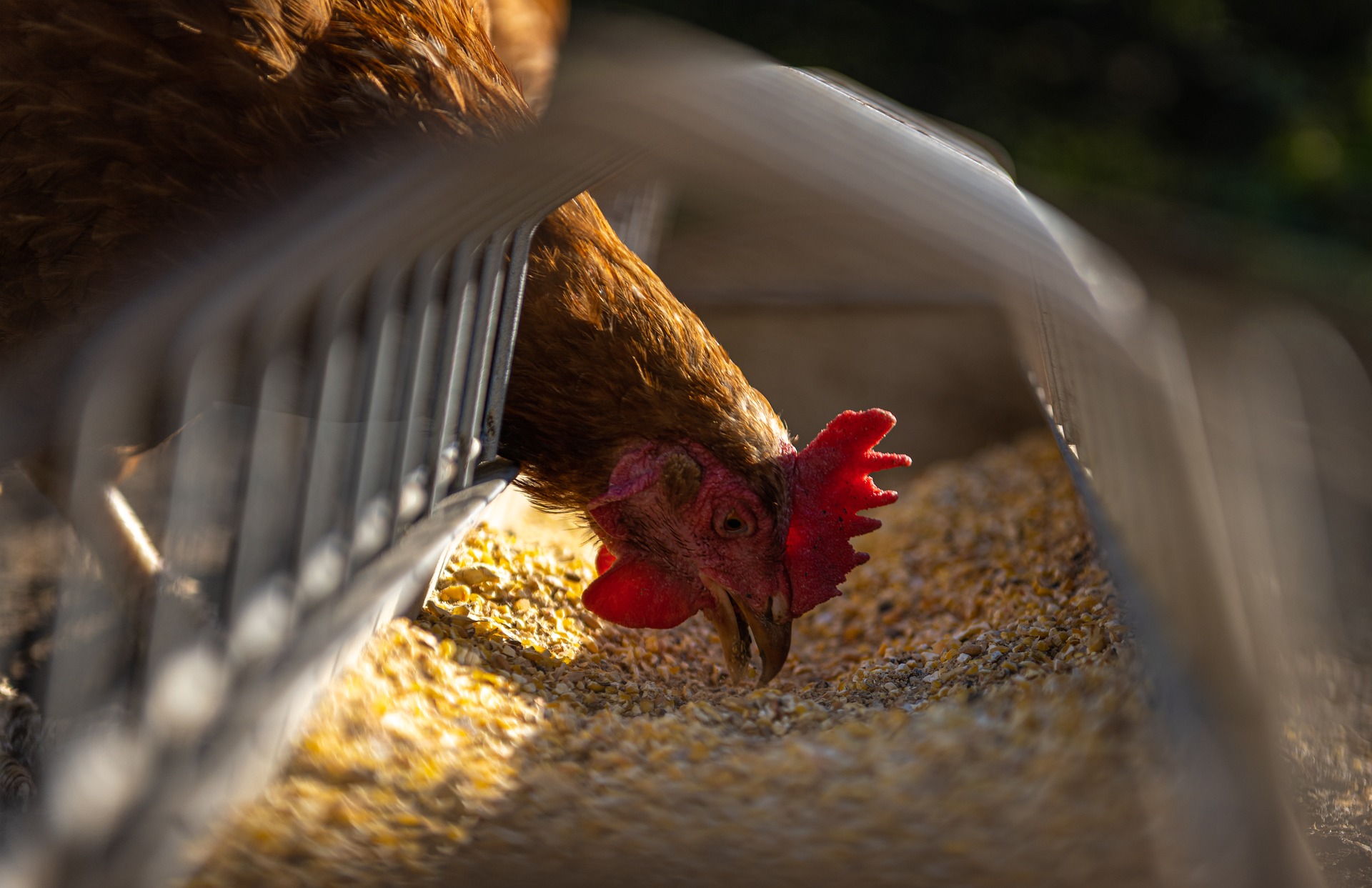
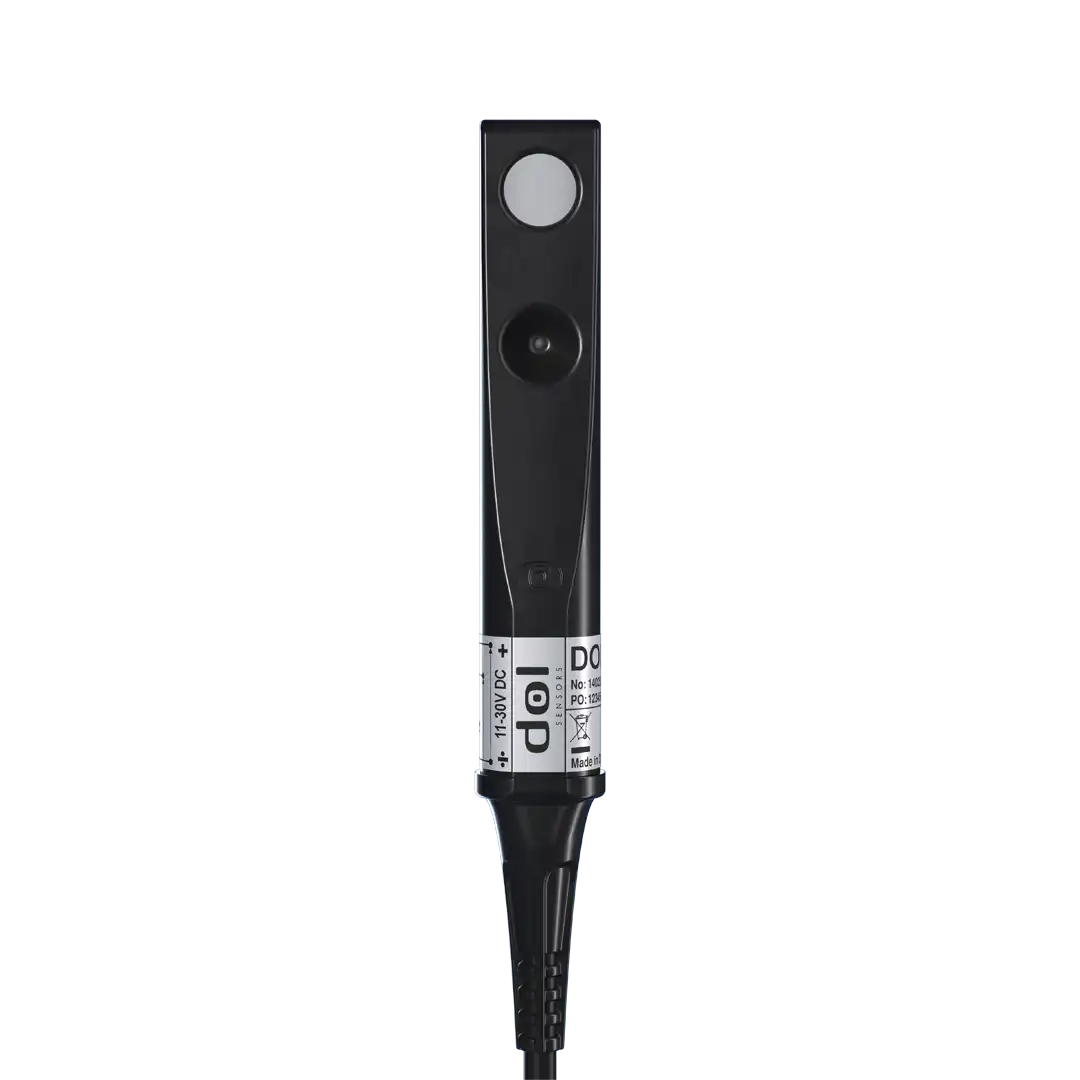
Implementing feeding schedules that align with the diurnal and growth patterns of poultry can prevent overfeeding and underfeeding, optimizing the FCR. Thus a reliable feed supply is vital to ensure an effective feed management. To obtain this, we recommend using accurate capacitive sensors that are designed for livestock environments.

Furthermore, proper storage of feed to prevent spoilage and designing feeders that minimize spillage can significantly reduce waste. To prevent damage of plan stored crops, use our wireless grain sensor to monitor moisture and temperature of the crops.

Feed Supply In Poultry Production
Discover practical strategies to improve feed supply through better feed management, environmental control, and flock health.
No items found.

Genetic Selection

Advances in genetics allow breeders to select strains of birds that naturally exhibit better feed conversion. Poultry breeders focus on traits like growth rate, feed intake, and adaptability to various farming conditions.

Optimal Feed Composition

Tailoring feed compositions to meet the exact nutritional requirements of poultry at different stages of their growth ensures that nutrients are not wasted. Ingredients like amino acids, enzymes, and probiotics can enhance digestion and nutrient absorption.

Health Management

Healthy birds convert feed more efficiently. Regular health checks, vaccinations, and biosecurity measures reduce the risk of disease, which can adversely affect FCR. Stress can lead to poor feed conversion as well. Ensuring comfortable housing, adequate space, and proper ventilation helps in maintaining an environment conducive to efficient feed conversion.

Environmental Controls

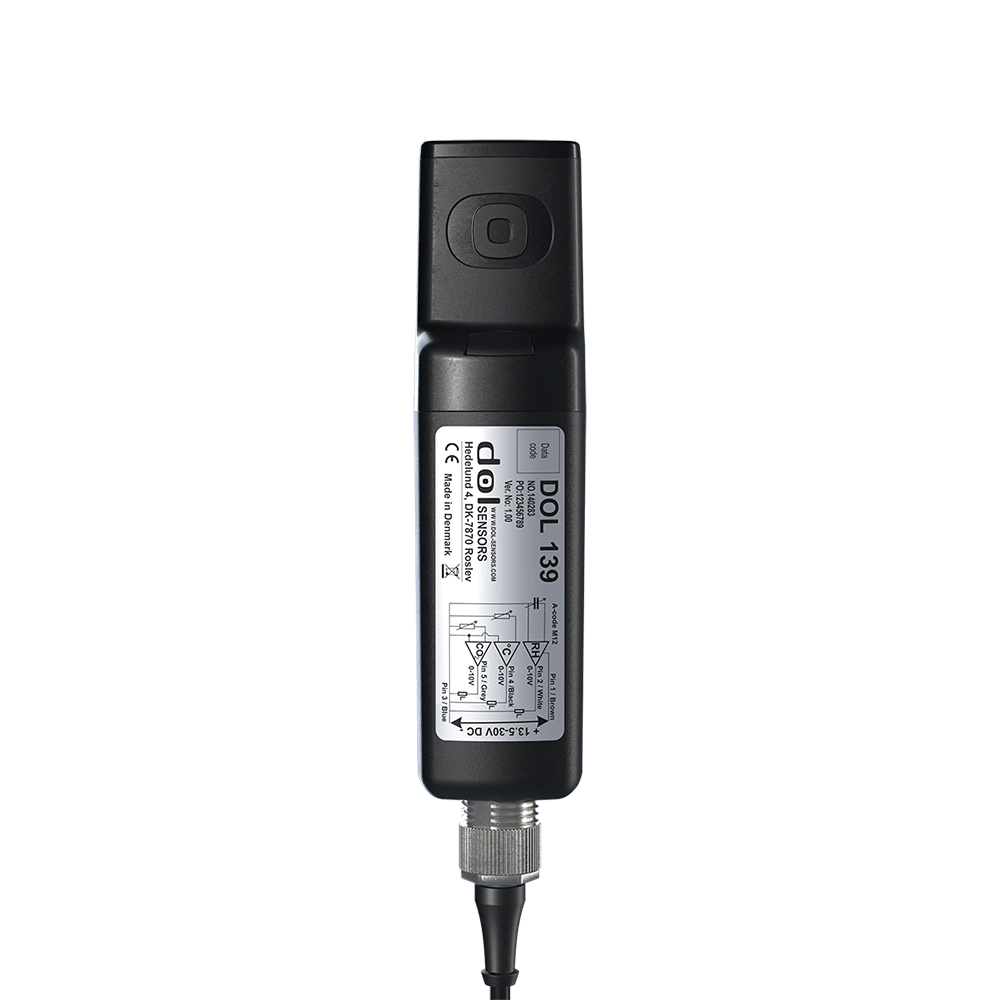
Birds are sensitive to their environment. Maintaining optimal temperature and humidity levels can impact feed intake and efficiency. Automated climate control systems with robust climate sensors design for livestock production can be instrumental in this regard.

Benefits of Improved FCR

Economic Benefits

Improving FCR directly reduces the cost per unit of output, enhancing profitability. As feed prices fluctuate, a lower FCR provides a buffer against potential increases in feed costs.

Environmental Benefits

Efficient feed usage means less feed production is needed, which can decrease the demand on agricultural resources like land, water, and energy. Additionally, reducing the amount of feed also lowers the carbon footprint of poultry production.

Healthier Poultry

Optimized feeding strategies contribute to healthier poultry. Better health generally correlates with improved growth rates and higher-quality products, satisfying consumer demand for healthier food options.
Avoid High Mortality In Poultry Production
Learn how continuous monitoring helps producers identify developing production challenges through changes in water consumption, growth performance and other key production indicators.

One of the most concerning challenges faced by poultry producers is high mortality rates, which not only affect profits but also indicate underlying issues in management, disease control, and environmental conditions. However, with proper planning, management, and proactive measures, it’s possible to mitigate mortality rates and sustain a healthy poultry operation.

Adequate Ventilation

Create a comfortable and stress-free environment for your poultry by providing well-ventilated housing that protects them from extreme weather conditions. Proper ventilation helps remove excess moisture, CO2, and ammonia from the air, reducing the risk of respiratory diseases.

Exposure to excessive heat or cold stress can weaken the immune system, making birds more susceptible to diseases and increasing mortality rates. Thus, adequate ventilation is vital to ensure the right temperature in the poultry house.

Climate sensors provide your ventilation system with data on humidity, CO2, and ammonia levels ad well as the temperature in different reas of the house.

Consistent And Reliable Feed Supply In Poultry Production
Learn how continuous monitoring helps producers identify developing production challenges through changes in water consumption, growth performance and other key production indicators.

Feed supply involves the delivery of raw materials, ingredients, or mixed feed to production sites like factories, plants, or animal farming operations. Maintaining a steady and dependable supply of feed is essential for the efficient functioning of any production site and for the well-being of animals in farming contexts.

Incorporating Capacitive Sensors into Feed Supply Management

Enhancing the feed supply chain’s effectiveness can be achieved by integrating capacitive sensors. Capacitive sensors are electronic devices that measure the capacity or amount of electrical charge stored in a material. They work by detecting changes in capacitance, which is the ability of a material to store an electrical charge.

Capacitive sensors have a wide range of applications in managing feed supplies. For instance, they are effective in gauging the quantity of raw materials in storage facilities like bins, silos, or tanks. This monitoring helps in averting material shortages and guarantees uninterrupted production due to sufficient raw material or compound feed availability.

Monitoring The Flow Rate

Capacitive sensors can also be used to monitor the flow rate of raw materials being transported through pipes or conveyor belts. This can help to optimize the rate at which materials are supplied to the production process, ensuring that there is neither an excess nor a deficiency of raw materials.

Overall, the use of capacitive sensors in the feed supply process can help to improve efficiency, reduce costs, and prevent disruptions in production. They offer a reliable and cost-effective means of monitoring and controlling the flow of raw materials, ensuring that production can be maintained at optimal levels.

How to Reduce Feeding Costs in Poultry Production
Learn how continuous monitoring helps producers identify developing production challenges through changes in water consumption, growth performance and other key production indicators.

Feed accounts for up to 70% of total production costs in poultry farming, making it the single largest expense for most producers. With fluctuating ingredient prices and increasing competition, finding effective ways to reduce feed costs—without compromising bird health or productivity—is essential for profitability.

Here are five expert strategies to help you cut feeding costs and improve efficiency on your poultry farm.

1. Consult Poultry Feeding Experts for Smarter Formulation

One of the most effective ways to cut feed costs without hurting performance is to work with qualified poultry nutritionists or feeding experts. These professionals understand how to balance nutrients efficiently while using locally available and affordable ingredients.

A feeding expert can:

  • Help you design least-cost rations that meet your birds’ nutritional needs.
  • Identify suitable alternative feed ingredients (like cassava, sorghum, palm kernel cake, or sunflower meal).
  • Analyze ingredient nutrient profiles to ensure you’re not overfeeding expensive nutrients.
  • Continuously adjust feed formulas as market prices and ingredient availability change.

By relying on expert advice instead of guesswork, farmers can achieve better feed efficiency, maintain bird health, and save significantly on overall feed expenses.

2. Minimize Feed Wastage

Even the best feed formulation is useless if much of it ends up on the floor. Feed wastage can silently drain profits, sometimes accounting for 5–10% of total feed losses.

Here’s how to reduce waste:

  • Use feeders with proper design and adjustable height to minimize spillage.
  • Fill feeders only up to two-thirds full.
  • Raise feeder levels as birds grow to avoid scratching out feed.
  • Keep feed storage areas dry, cool, and pest-free to prevent spoilage and contamination.

Simple management changes like these can save thousands of dollars over time.

3. Adopt Phase Feeding Programs

Birds have different nutritional needs at each stage of growth. Using the same feed throughout their life leads to waste and inefficiency.

Phase feeding means adjusting feed composition based on the bird’s age and production stage—for example:

  • Starter, grower, and finisher diets for broilers
  • Pre-lay, peak-lay, and post-peak diets for layers

By tailoring nutrients to each phase, farmers can save 5–8% in feed costs while maintaining growth rates and egg production.

Selected Sensors

Documents

English
Leaflet
Climate Brochure
English
Leaflet
Corporate Brochure Poultry
English
Leaflet
Capacitive Brochure

Join our newsletter

Stay ahead in livestock production.

Join our newsletter and get industry insights, expert perspectives, and practical strategies for optimizing performance and efficiency.