
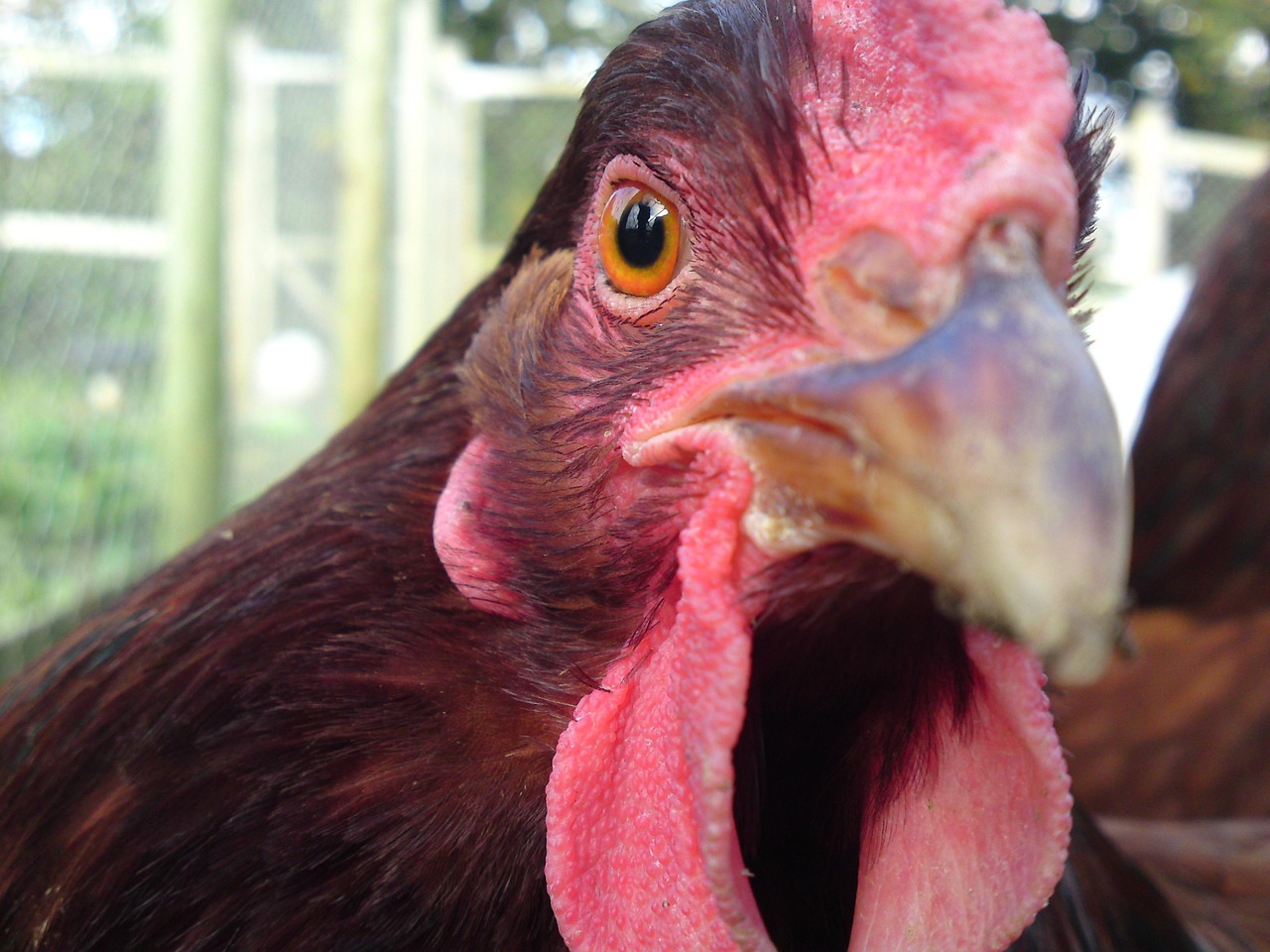
Light is one of the most powerful regulators of life. For poultry, it is more than just a way to see—it shapes their physiology, behavior, and productivity. Unlike humans, who mainly rely on vision through their eyes, poultry experience light in a surprisingly complex way, involving not only their eyes but also special light-sensitive structures deep within their brains.
Chickens, turkeys, and other poultry species see the world quite differently from humans. While our vision is based on three types of cone cells in the retina (red, green, and blue sensitivity), poultry have four to five types of cones, including one tuned to ultraviolet (UV) light. This means they see a richer, more vibrant spectrum than we do, detecting subtle markings on feathers and food that are completely invisible to humans.
Each cone cell in poultry is also paired with a colored oil droplet that acts like a filter, sharpening color discrimination. Imagine seeing the world through built-in polarizing sunglasses—poultry have that advantage every day.
Here’s where poultry differ most from humans: they can perceive light not just through their eyes, but through specialized photoreceptors in their pineal gland and hypothalamus.
This is why the color and duration of artificial lighting in poultry houses can affect egg production, fertility, and even stress levels.
The spectrum of light influences poultry differently:
Without UV, chickens may have a distorted perception of feather colors, potentially altering how they interact socially within a flock.
Modern poultry production carefully controls light intensity, duration, and spectrum. By mimicking natural cycles or adjusting them strategically, farmers can improve welfare and efficiency. For example, providing UV light in indoor housing can reduce stress and enhance natural behaviors, while shifting to red light during laying encourages sustained egg production.
But this raises ethical questions too—how much should we manipulate light for productivity, and how much should we prioritize a more natural sensory environment for the birds?
