
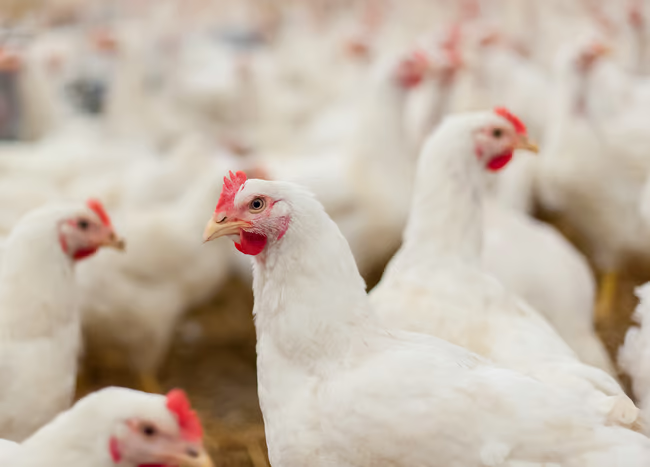
Since the 1970s, the poultry industry has undergone one of the most dramatic transformations in the global food system. What was once a relatively small sector of agriculture has become the world’s fastest-growing source of animal protein. In fact, between 1970 and 2020, global chicken meat production increased by more than 800 percent, reflecting sweeping changes in farming practices, consumer demand, and international trade.
For much of the twentieth century, red meat dominated diets in many parts of the world. Poultry, however, has steadily overtaken beef and pork in several key markets. This shift has been fueled by affordability, as chicken production requires less feed, water, and land compared to cattle and pigs. It has also been influenced by health perceptions, since consumers increasingly regard poultry as a leaner and healthier alternative to red meat. Its adaptability in cuisine has further cemented its global rise, as chicken fits naturally into diverse cooking traditions and dietary restrictions.
The story of poultry is also one of regional variety. In North America and Europe, the industry has become highly industrialized, with large-scale operations and vertically integrated supply chains. Chicken is now the most consumed meat in the United States, surpassing beef in the 1990s. In Europe, affordability continues to drive consumption, while demand for organic and free-range products has grown alongside rising consumer awareness of sustainability and welfare issues.
In Asia, rapid urbanization and income growth have fueled a surge in poultry consumption, particularly in China and India, while in Southeast Asia, chicken is firmly rooted in street food culture and home cooking alike. Latin America has emerged as a powerhouse in production, with Brazil ranking among the top exporters of chicken worldwide thanks to its abundant grain supplies and strong infrastructure. Africa’s poultry market, by contrast, tells a more complex story. Consumption is expanding, but local production often struggles to meet demand, leading to significant imports, especially of frozen chicken. At the same time, many African countries are investing in the development of domestic industries to reduce reliance on imports and strengthen food security.
Technology and innovation have played a crucial role in the expansion of poultry worldwide. Advances in breeding, feed efficiency, and veterinary care have transformed productivity, allowing farmers to raise more birds with fewer resources. Modern poultry operations are far removed from their 1970s counterparts, relying on genetics, automation, and precision farming techniques that reduce costs while ensuring consistency. These improvements have enabled producers to keep pace with population growth and the rising demand for affordable protein.
Yet the industry’s success is accompanied by challenges. Environmental sustainability has become a pressing concern, with greater scrutiny on greenhouse gas emissions, water use, and waste management. Animal welfare is increasingly shaping both regulation and consumer expectations, with many buyers opting for products labeled cage-free, free-range, or organic. Looking further ahead, the rise of alternative proteins, from plant-based substitutes to lab-grown chicken, suggests that competition in the protein market will only intensify.