Industrial Climate Sensors for Demanding Environments

Maintaining the right climate is essential for operational efficiency, process stability, and environmental control in both industrial and agricultural applications. Accurate climate sensors provide the data needed to control ventilation, heating, and cooling systems, helping operators maintain stable conditions and optimize performance.

Best Industrial Climate Sensors

Industrial environments often expose sensors to dust, humidity, and temperature fluctuations. Sensors developed for livestock houses are designed to withstand exactly these demanding conditions, making them a robust choice for a wide range of industrial applications.

Key climate measurements include:

  • Temperature
  • Relative humidity
  • Carbon dioxide (CO₂)
  • Ammonia (NH₃)
  • Differential pressure

When connected to a climate controller, these sensors continuously provide data that allows ventilation systems to respond automatically to changing conditions.

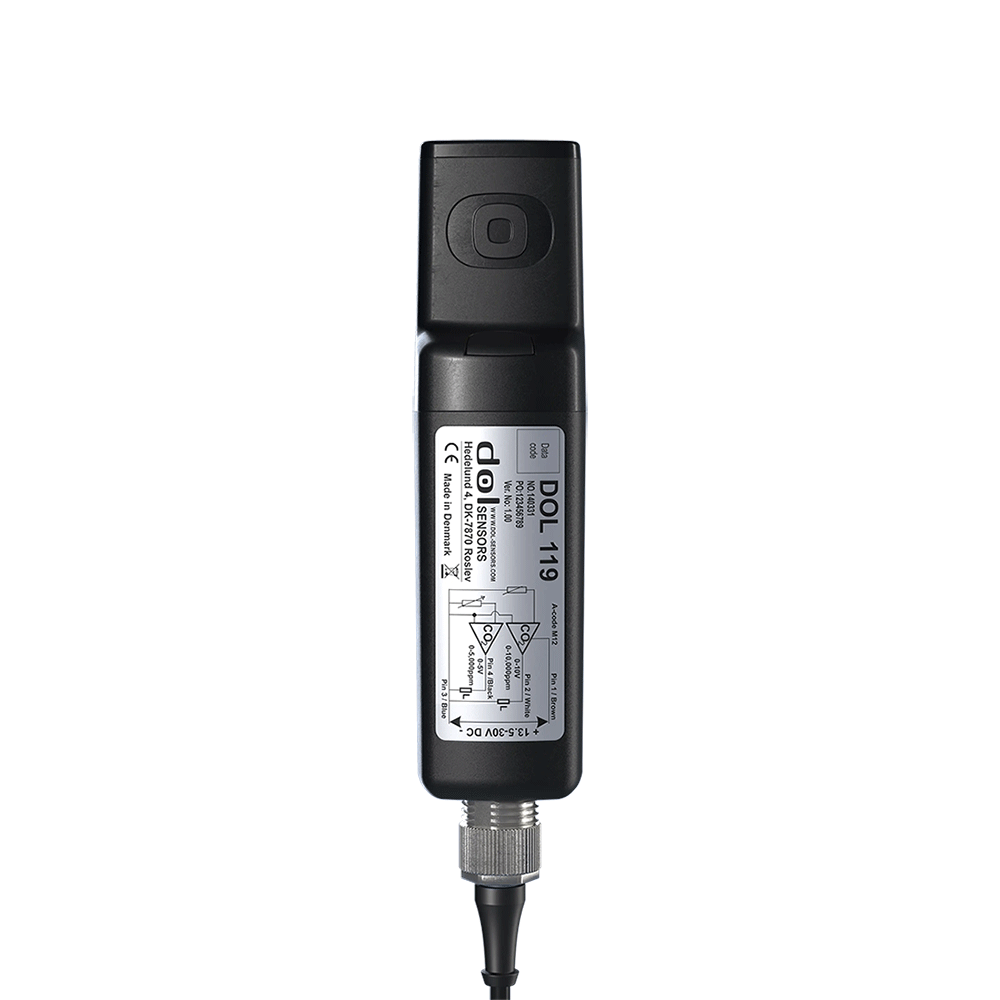
The DOL 119 CO2 censor enables precise monitoring of carbon dioxide levels in demanding environments, while the award-winning DOL 53 Ammonia Sensor provides reliable NH3 measurements. Together, they support optimal air quality, efficiency, and healthy environmental conditions.

Read Climate Sensors That Fit All Farm Controllers

Sensors Built For Industrial Applications

Temperature and humidity are critical parameters in both industrial and agricultural applications. Accurate monitoring helps maintain stable conditions, supports ventilation control, and improves operational efficiency.

The DOL 114 Humidity and Temperature Sensor is designed for demanding environments and delivers reliable measurements even in conditions with high humidity, dust, and ammonia.

For farms seeking multiple climate measurements from a single device, the DOL 139 combines temperature, humidity, and CO2 monitoring, simplifying installation and climate management.

Using CO2 Sensors to Improve Poultry Performance

CO2 monitoring is an important part of ventilation and climate management in industrial and agricultural environments. Elevated CO2 levels can indicate insufficient ventilation and negatively impact both indoor air quality and operational conditions.

When selecting a CO₂ sensor, users should look for:

  • High measurement accuracy
  • Long-term stability
  • Fast response time
  • Resistance to harsh livestock environments
  • Compatibility with climate control systems

Reliable CO₂ sensors help ventilation controllers maintain healthy air quality while balancing energy consumption and production requirements.

Climate Sensors That Fit All Farm Controllers
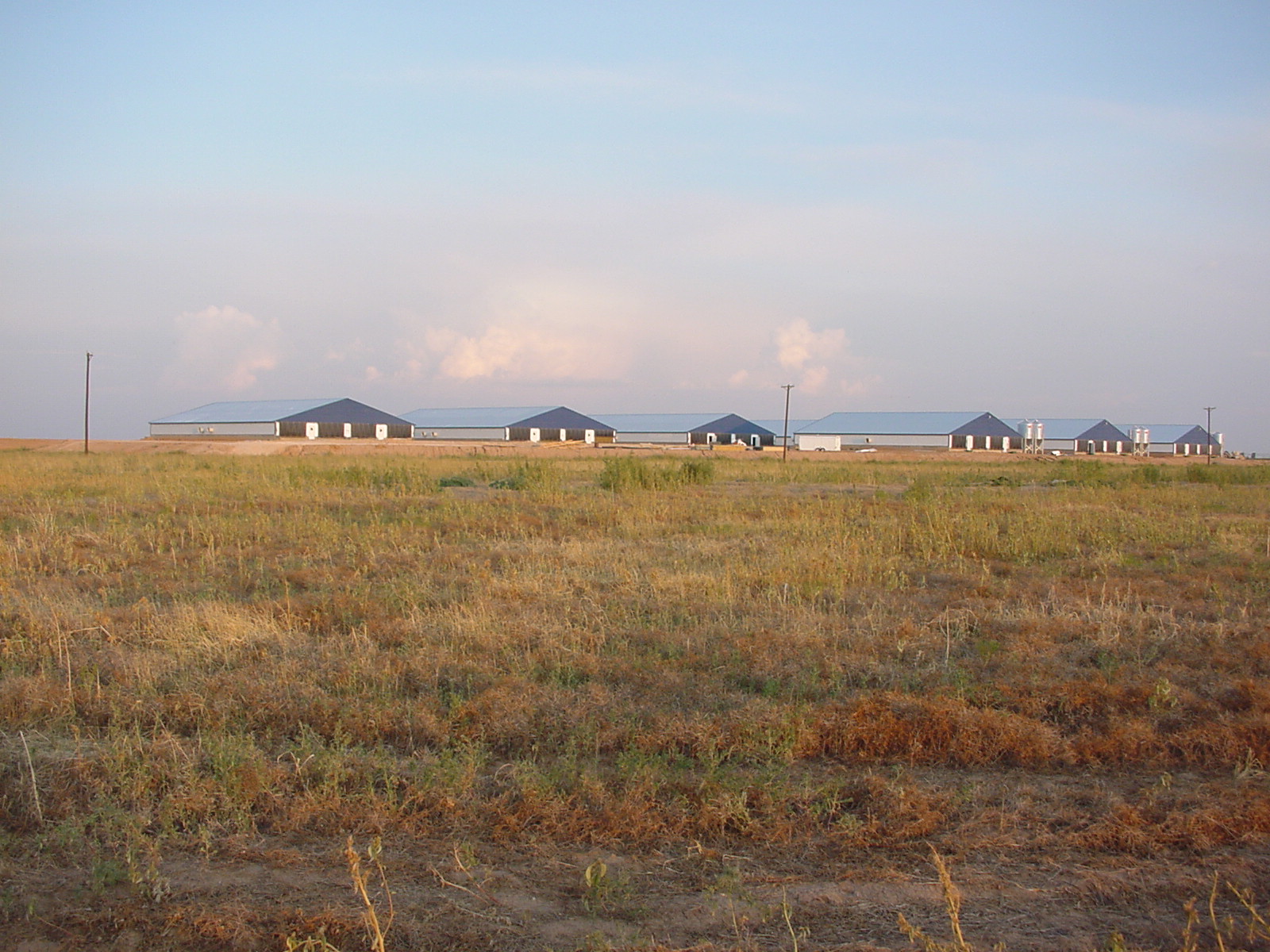
Discover climate sensors from dol-sensors are specially designed for the harsh environment in livestock houses.

Integrating CO₂ Sensors into Livestock Climate Controllers

For OEMs and system integrators, sensor compatibility is just as important as measurement accuracy. CO₂ sensors should integrate easily with existing climate controllers and support industry-standard output signals.

Important considerations include:

  • Analog and digital output options
  • Easy installation and calibration
  • Reliable long-term performance
  • Technical support and documentation
  • Proven use in agricultural applications

Our customized solutions can be adapted to specific control systems and application requirements. This helps integrators reduce installation complexity and achieve seamless integration.

Create a Better Livestock Environment with Climate Sensors

Accurate climate sensors help producers maintain optimal conditions through automated ventilation and environmental control. By monitoring temperature, humidity, and CO₂ levels, farms can improve animal welfare, enhance production performance, and optimize energy use.

Agricultural CO2 Sensors
Learn how continuous monitoring helps producers identify developing production challenges through changes in water consumption, growth performance and other key production indicators.

Understanding Agricultural CO2 Sensors

Agricultural CO2 sensors are pivotal tools in the realm of modern farming. These devices measure the concentration of carbon dioxide in the atmosphere, providing invaluable data for farmers and farm managers.

Plants absorb carbon dioxide during photosynthesis, a process that fuels their growth. Monitoring CO2 levels in a closed environment such as a greenhouse ensures that crops have an optimal environment to thrive, leading to better yields and healthier produce.

For animals, it is extremely important to maintain a low CO2 level in the atmosphere inside the livestock house. Animals are dependent on oxygen and carbon dioxide in high concentrations can give them difficulty breathing, descrease production and even raise mortality.

The Evolution of CO2 Monitoring in Agriculture

The journey of CO2 monitoring in agriculture is a testament to human ingenuity. In the early days, farmers relied on rudimentary methods and intuition to gauge the health of their crops and livestock. However, as technology advanced, so did the methods of monitoring. The introduction of CO2 sensors revolutionized farming, allowing for precision agriculture. These advancements meant that farmers could now get real-time data, leading to more informed decisions and improved crop yields and production outcomes.

Installing and Maintaining Your Agricultural CO2 Sensors

Proper installation and maintenance of agricultural CO2 sensors are crucial for accurate readings.

How to install your sensor depends on the sensors, but normally the sensor needs to be placed away from direct sunlight or any artificial light sources. Ensure the area around the sensor is well-ventilated to avoid skewed readings.

Maintaining your CO2 sensor also depends on which sensor you choose, but most sensors will need calibration and cleaning from dust and debris once in a while.

Interpreting Data and Making Informed Decisions

Data from CO2 sensors can be a treasure trove of insights, but understanding and interpreting this data correctly is paramount for its effective utilization.

To see the data from your CO2 sensor you will most likely have to connect it to some kind of controller. In livestock production the CO2 sensors are connected to a farm controller that show the farm manager updated and historical data from the sensor.

The Hidden Role Of CO2
Learn how continuous monitoring helps producers identify developing production challenges through changes in water consumption, growth performance and other key production indicators.

Why Your Poultry Growth is Slowing Down: The Hidden Role of CO₂

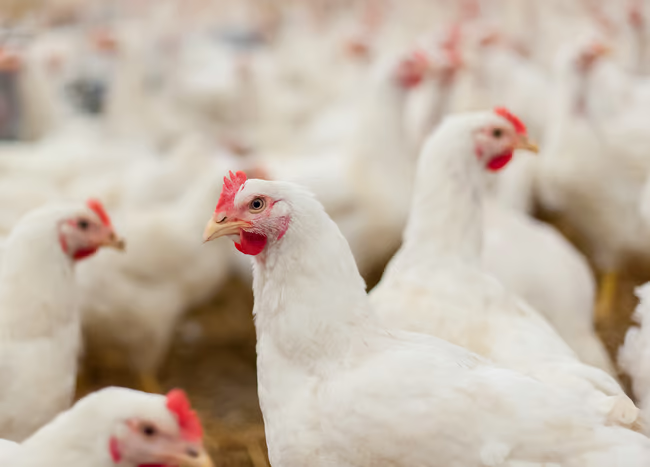
In modern poultry production, maintaining optimal air quality inside housing facilities is just as important as feed, water, and biosecurity. One of the most overlooked factors that can undermine bird performance is elevated carbon dioxide (CO₂) levels. While often associated with poor ventilation, excessive CO₂ in poultry houses can have direct and damaging effects on flock health, growth, and overall productivity.

How CO₂ Builds Up in Poultry Houses

CO₂ is naturally produced by the birds themselves through respiration, but it also accumulates from the combustion of heating systems, especially during colder months when houses are tightly sealed to conserve heat. Without proper ventilation, CO₂ concentrations can rise quickly, reducing the oxygen available to birds and compounding other air quality challenges.

Waterproof CO2 Sensor
Learn how continuous monitoring helps producers identify developing production challenges through changes in water consumption, growth performance and other key production indicators.

In the agricultural industry, CO2 or carbon dioxide plays a vital role, since it affects the animal welfare and thus the performance of the production. This is why CO2 sensors are crucial instruments in livestock production.

CO2 sensors measure the level of carbon dioxide in the livestock house and combined with at farm controller it can help controlling the ventilation system automatically, ensuring optimum climate conditions for the animals.

Designed For Reliable CO2 Monitoring

In the agricultural industry, CO2 or carbon dioxide plays a vital role, since it affects the animal welfare and thus the performance of the production. This is why CO2 sensors are crucial instruments in livestock production.

CO2 sensors measure the level of carbon dioxide in the livestock house and combined with at farm controller it can help controlling the ventilation system automatically, ensuring optimum climate conditions for the animals.

Selected Sensors

Documents

English
Leaflet
DOL 119 One pager
English
Leaflet
Climate Brochure

Join our newsletter

Stay ahead in livestock production.

Join our newsletter and get industry insights, expert perspectives, and practical strategies for optimizing performance and efficiency.