Reactive vs Proactive Poultry Production Management

Maintaining flock health, achieving target weights and optimising feed conversion all depend on making the right management decisions at the right time.

Traditionally, many of these decisions have been based on routine inspections and visible observations.

While these remain essential, modern poultry production is becoming increasingly complex. Larger houses, growing flock sizes and increasing production targets make it more difficult to identify developing challenges before they begin affecting performance.

This is driving a shift from reactive management towards a more proactive approach.

What Is Reactive Poultry Production Management?

Reactive management means responding after a problem has become visible.

Examples include:

  • Mortality begins to increase.
  • Birds become less active.
  • Feed conversion declines.
  • Environmental conditions affect bird comfort.
  • Clinical symptoms become visible.

These situations require immediate action.

However, by the time they occur, flock performance may already have been affected.

Reactive management focuses on solving existing problems.

Why are many production challenges identified too late?
Read: How Continuous Monitoring Enables Earlier Detection of Production Problems
No items found.

What Is Proactive Poultry Production Management?

Proactive management focuses on recognising changes before they develop into larger production challenges.

Rather than waiting for visible symptoms, producers monitor trends that may indicate changing production conditions.

Examples include:

  • Changes in water consumption
  • Variations in flock behaviour
  • Changes in environmental conditions
  • Reduced feed intake

These indicators do not diagnose disease.

Instead, they provide valuable insight into when production conditions have changed and deserve closer attention.

Earlier Visibility Creates More Opportunities

The greatest advantage of proactive management is time.

Earlier insight allows producers to:

  • Inspect the flock sooner
  • Verify environmental conditions
  • Investigate possible causes
  • Review management practices
  • Reduce the impact of developing production challenges

Earlier visibility does not eliminate risk.

However, it provides greater opportunity to act before performance is significantly affected.

How does continuous monitoring support proactive management?

Discover how continuous monitoring provides greater visibility into daily production.

→ Read: How Continuous Monitoring Enables Earlier Detection of Production Problems

Data Supports Better Decisions

Technology does not replace experienced farm managers.

Successful poultry production will always depend on people who understand bird behaviour, flock management and daily operations.

Production data simply provides additional insight.

When combined with practical experience, production data helps producers:

  • Validate observations
  • Identify developing trends
  • Prioritise inspections
  • Make better-informed management decisions

The objective is not to collect more data.

The objective is to improve decision-making through earlier visibility.

Production Trends Reveal Developing Challenges

A single observation rarely explains how flock performance is developing.

Instead, producers benefit from understanding trends over time.

Questions worth asking include:

  • Is water consumption changing?
  • Is flock behaviour becoming less consistent?
  • Are environmental conditions stable?
  • Are several indicators changing simultaneously?

Looking at production trends rather than isolated events provides a stronger foundation for proactive flock management.

How does continuous monitoring improve visibility into flock performance?

Discover how continuous monitoring helps identify developing production challenges earlier.

→ Read: How Continuous Monitoring Enables Earlier Detection of Production Problems

Proactive Management Supports More Consistent Flock Performance

The objective of proactive management is not to predict every production challenge.

Instead, it is to identify meaningful changes before they begin affecting performance.

By recognising deviations earlier, producers gain more time to:

  • Investigate possible causes
  • Improve flock conditions
  • Maintain production consistency
  • Support bird welfare
  • Reduce production variability

Rather than reacting to problems after they occur, producers can focus on maintaining stable production conditions throughout the production cycle.

Conclusion

Reactive management will always remain an important part of poultry production.

However, as production systems continue to grow in scale and complexity, earlier visibility into production conditions becomes increasingly valuable.

By combining experience with production data and continuous insight, producers can move from responding to problems after they occur towards recognising changes before they begin affecting flock performance.

The next step is understanding which production indicators provide the earliest warning signs—and how they can be monitored in practice.

Continue Reading: Which Production Indicators Can Help Detect Health Problems Earlier?
Explore how water consumption, environmental conditions and flock behaviour can provide earlier insight into poultry health and production performance.
Automated Climate and Ventilation in Poultry
Learn how continuous monitoring helps producers identify developing production challenges through changes in water consumption, growth performance and other key production indicators.

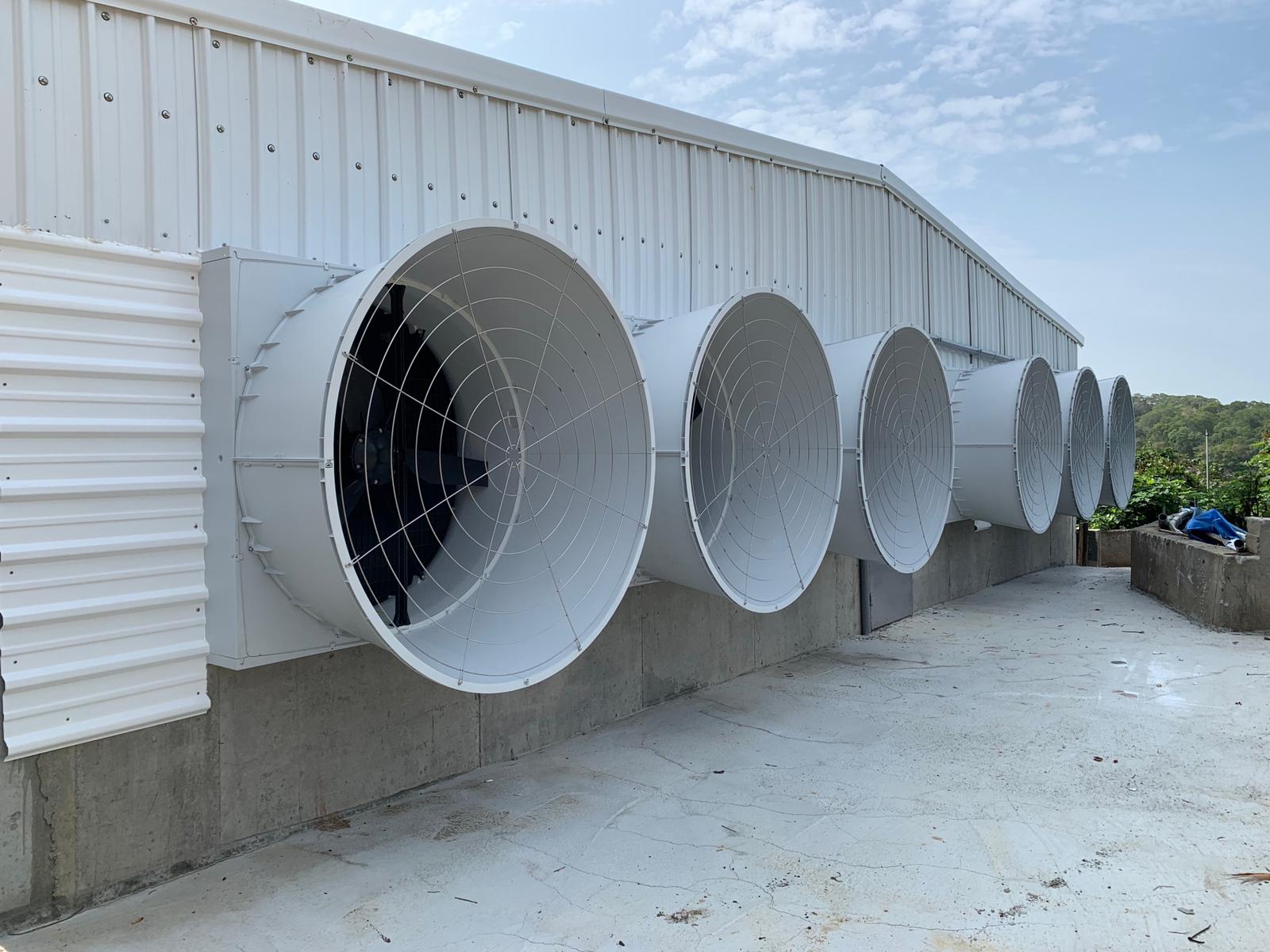
Climate management is one of the most decisive factors in successful poultry production. Poultry are extremely sensitive to their environment, particularly temperature, air quality, and airflow. Because birds have a high metabolic rate and limited ability to regulate body temperature, even small deviations from optimal conditions can quickly lead to heat stress, reduced feed intake, poor growth, higher mortality, and uneven flock performance. Automated climate and ventilation systems play a critical role in maintaining stable conditions and supporting efficient, modern poultry production.

Why Climate Control Is Essential in Poultry Houses

Unlike mammals, poultry do not sweat. They regulate body temperature mainly through respiration and behavior, making them highly dependent on ventilation and air movement. Inadequate climate control can result in:

  • Heat stress during warm periods
  • Chilling and uneven growth during cold conditions
  • Wet litter due to poor moisture removal
  • Elevated ammonia levels that damage respiratory health and footpads

High stocking densities further increase heat and moisture production, especially in broiler houses. Manual climate adjustments are often too slow and imprecise to respond to rapid changes in bird age, body weight, or outside weather conditions.

Automated systems continuously monitor and regulate critical environmental parameters such as:

  • Temperature and relative humidity
  • Ammonia and carbon dioxide levels
  • Air velocity and pressure
  • Outside climate conditions

Based on real-time data, ventilation rates, heating, cooling, and air inlets are adjusted automatically to match the birds’ needs at every stage of production.

Consumer Trends And Preferences In Poultry Products
Learn how continuous monitoring helps producers identify developing production challenges through changes in water consumption, growth performance and other key production indicators.

Poultry products have long been a cornerstone of global diets, but in recent years the way consumers choose, purchase, and consume them has been shifting. Evolving preferences, health considerations, sustainability concerns, and technological innovations are reshaping demand across markets. Understanding these dynamics is critical for producers, retailers, and policymakers aiming to align supply with changing consumer behavior.

Health and Nutrition as Key Drivers

Health consciousness has become one of the most powerful forces shaping consumer demand in the poultry industry. Increasingly, buyers are drawn to poultry—especially chicken—because it is widely perceived as a lean, high-quality protein that contains less saturated fat than red meat. This aligns with popular dietary patterns such as high-protein, low-carb, and weight management plans, making poultry a flexible option across diverse lifestyles.

At the same time, consumers are looking more closely at how poultry is raised and processed. The demand for products labeled antibiotic-free, hormone-free, or organic has surged, reflecting concerns about food safety, long-term health effects, and transparency in farming practices. According to recent market analyses, shoppers are also showing growing interest in “functional” poultry products, such as chicken enriched with omega-3 fatty acids or raised with specialized feed to improve nutritional content. These preferences indicate that health is no longer defined only by calorie counts or fat levels, but by the overall integrity of the food chain. In this sense, poultry producers who emphasize clean, natural, and responsibly raised products are aligning with a major consumer priority.

Shift Toward Convenience

Busy lifestyles and urbanization are driving demand for poultry products that save time and effort. Ready-to-cook marinated chicken, frozen nuggets, and pre-cooked deli meats are increasingly popular in both developed and emerging markets. Packaging innovations - such as resealable packs and portion-controlled servings - enhance convenience and reduce food waste, aligning with consumer expectations.

Free-Range vs. Cage Systems in Poultry Production
Learn how continuous monitoring helps producers identify developing production challenges through changes in water consumption, growth performance and other key production indicators.

Free-Range vs. Cage Systems in Poultry Production: Benefits and Pitfalls

Few topics in poultry farming spark as much debate as housing systems. Should chickens be raised in cages or in free-range environments?

Both approaches have advantages and challenges, and the choice often depends on how farmers weigh efficiency, animal welfare, food safety, and consumer expectations.

Cage Systems: Efficient but Controversial

Cage systems, whether conventional or enriched, became the global standard for egg production in the mid-20th century. They were designed to maximize efficiency and food safety, allowing large numbers of hens to be managed in a controlled environment. This consistency led to high egg output and reliable feed conversion, while the reduced contact with litter helped lower the risk of some diseases and parasites. Mortality rates in well-managed cage systems are often lower than in alternative systems, and daily tasks such as feeding, watering, and egg collection are easier to manage.

Despite these strengths, cage systems remain highly controversial. By design, cages restrict birds’ natural behaviors such as dust bathing, wing flapping, foraging, and nesting. This lack of behavioral freedom has become a central welfare concern, particularly as consumers grow more aware of how their food is produced. Limited movement also affects bone strength and can lead to higher rates of osteoporosis. In many markets, conventional battery cages are being phased out altogether, replaced either by enriched cages with perches and scratching areas, or by alternative housing systems.

Free-Range Systems: Welfare and Consumer Appeal

Free-range production presents a very different image, one that appeals strongly to consumers. Birds have greater freedom of movement and outdoor access, allowing them to express natural behaviors such as scratching, foraging, and dust bathing. This generally improves welfare and reduces stress, while more activity supports stronger muscles and bones. Free-range eggs are often marketed as healthier or more sustainable, and products from these systems can command a premium price in the marketplace.

For producers, however, free-range is not without challenges. Outdoor access increases the risk of exposure to predators, parasites, and pathogens such as avian influenza. Biosecurity is harder to maintain, and mortality rates are generally higher than in cage systems. Feed efficiency is often reduced, as birds spend more energy on activity and foraging. In addition, if outdoor areas are not carefully managed, manure accumulation can lead to soil degradation and nutrient pollution.

Selected Sensors

No items found.

Documents

No items found.

Join our newsletter

Stay ahead in livestock production.

Join our newsletter and get industry insights, expert perspectives, and practical strategies for optimizing performance and efficiency.