Compare Data From Multiple Pig Farms

Harnessing Data for Excellence in Pig Production

In the dynamic world of pig farming, data has become a pivotal asset for achieving operational excellence. As a pig producer with multiple farms, leveraging data gathered from various sources is key to optimizing production, health, and overall farm efficiency.

Data Collection – The Core of Modern Pig Farming

Collecting accurate and relevant data is the first critical step. In pig production, this encompasses a range of metrics such as feed intake, water consumption, breeding efficiency, and environmental factors such as CO2 level, ammonia level, temperature, and humidity. Today’s farms utilize advanced sensors and intelligent farm controllers to track these variables, providing a rich dataset for analysis.

Smarter Farm Management
Discover how sensor data leads to smarter farm management, such as improving decision-making, and help optimize production, welfare, and efficiency.

Standardizing Data for Comparable Insights

To compare data meaningfully across farms, it’s essential to establish standardized data collection procedures. This ensures that data captured on different farms are comparable in terms of format and quality. Utilizing integrated farm management software can facilitate this process, allowing data from disparate sources to be aggregated and normalized. It also makes sense using the same sensors to ensure the data is comparable.

Analyzing and Comparing Data

With standardized data, we can now delve into analysis. Key Performance Indicators (KPIs) for pig production might include feed conversion ratio, mortality rates, and reproductive performance. By employing analytical tools, we can benchmark these KPIs across our various farms, identifying best practices and areas needing improvement.

Data visualization is a powerful tool in discerning trends and underlying patterns. For instance, a trend in decreased feed efficiency in one farm might prompt a review of feed formulations or feeding strategies. These insights are invaluable for making informed management decisions.

Learning and Adapting

The true value of data lies in its application. By studying cases where data-led interventions have led to improvements, we can distill best practices that might be applicable across our farms. This step involves not just adopting successful strategies but adapting them to each farm’s unique context.

Implementing changes based on data insights requires careful planning and management. Tailoring strategies to suit each farm’s specific conditions is crucial. Equally important is the role of staff training and engagement in the process of change, ensuring that the adaptations are well-understood and effectively executed.


Automated Climate and Ventilation in Pig Production
Learn how continuous monitoring helps producers identify developing production challenges through changes in water consumption, growth performance and other key production indicators.

Maintaining the right climate is one of the most critical factors in efficient pig production. Pigs are highly sensitive to changes in temperature, humidity, and air quality. Any imbalance can lead to heat stress, poor feed conversion, increased disease risk, and reduced growth rates. Automated climate and ventilation systems are transforming how farmers manage these challenges — ensuring healthier animals, greater efficiency, and higher profits.

The Importance of Climate Control in Pig Housing

Optimal climate control directly influences animal welfare and performance. Pigs cannot sweat, so managing heat and humidity within their environment is essential. Poor air quality caused by excess ammonia, carbon dioxide, or dust can also impact respiratory health and feed intake. Manual monitoring and adjustments can be time-consuming and inconsistent, especially in large-scale operations.

Automated systems solve this by continuously monitoring environmental factors such as:

  • Temperature and humidity levels
  • Ammonia and carbon dioxide concentrations
  • Airflow and ventilation rates
  • External weather conditions

By automatically adjusting fans, heaters, and inlets, these systems keep conditions stable around the clock.

Consumer Trends Reshaping the Pork Market
Learn how continuous monitoring helps producers identify developing production challenges through changes in water consumption, growth performance and other key production indicators.

Global demand for pork continues to rise — but not evenly across the world. Developing regions are driving much of this growth, while consumption in many wealthier countries has slowed or even declined. As health awareness, sustainability concerns, and evolving lifestyles reshape consumer preferences, the pork industry faces both new challenges and exciting opportunities.

Global Growth: Developing Markets Lead the Way

In Asia, Latin America, and parts of Africa, pork remains a key source of affordable protein. Rising incomes, urbanization, and expanding middle classes are fueling demand for meat products — particularly pork, which is widely accepted and culturally significant in many regions.

China remains the world’s largest consumer and producer of pork, though other markets such as Vietnam, the Philippines, and Mexico are showing strong growth. Consumers in these regions are increasingly turning to processed and value-added pork products that offer convenience and food safety assurances.

Mature Markets: Shifting Priorities in Developed Economies

In contrast, pork consumption in North America and Europe has plateaued or declined slightly. Consumers in these markets are becoming more selective — prioritizing health, ethics, and sustainability over quantity. This shift is leading to new patterns in purchasing and product development, including:

  • Lean and low-fat options: Health-conscious consumers are reducing red meat intake but still seek lean, high-quality pork cuts.
  • Plant-protein competition: Flexitarian diets are gaining popularity, driving producers to emphasize the nutritional value and environmental efficiency of pork.
  • Premium and traceable products: There’s growing demand for pork raised with higher welfare standards, traceable origins, and antibiotic-free claims.

Feed and Gut Health: The Foundation of Strong, Active Pigs
Learn how continuous monitoring helps producers identify developing production challenges through changes in water consumption, growth performance and other key production indicators.

Healthy pigs start with a healthy gut. When digestion works smoothly and nutrients are absorbed efficiently, pigs grow faster, stay more resilient, and remain active throughout the production cycle. Gut health is one of the biggest drivers of performance, and one of the easiest to overlook.

Why Gut Health Shapes Performance

Feed Quality Sets the Tone

Balanced protein, the right fiber levels, and consistent feed structure all support stable digestion. Clean water and high-quality raw materials help pigs maintain a healthy gut and steady appetite.

Selected Sensors

Documents

English
Technical User Guide
T-bracket for Sensor TUG_EN_604169
English
Technical Information
DOL 53 Technical Info_EN
English
Technical Information
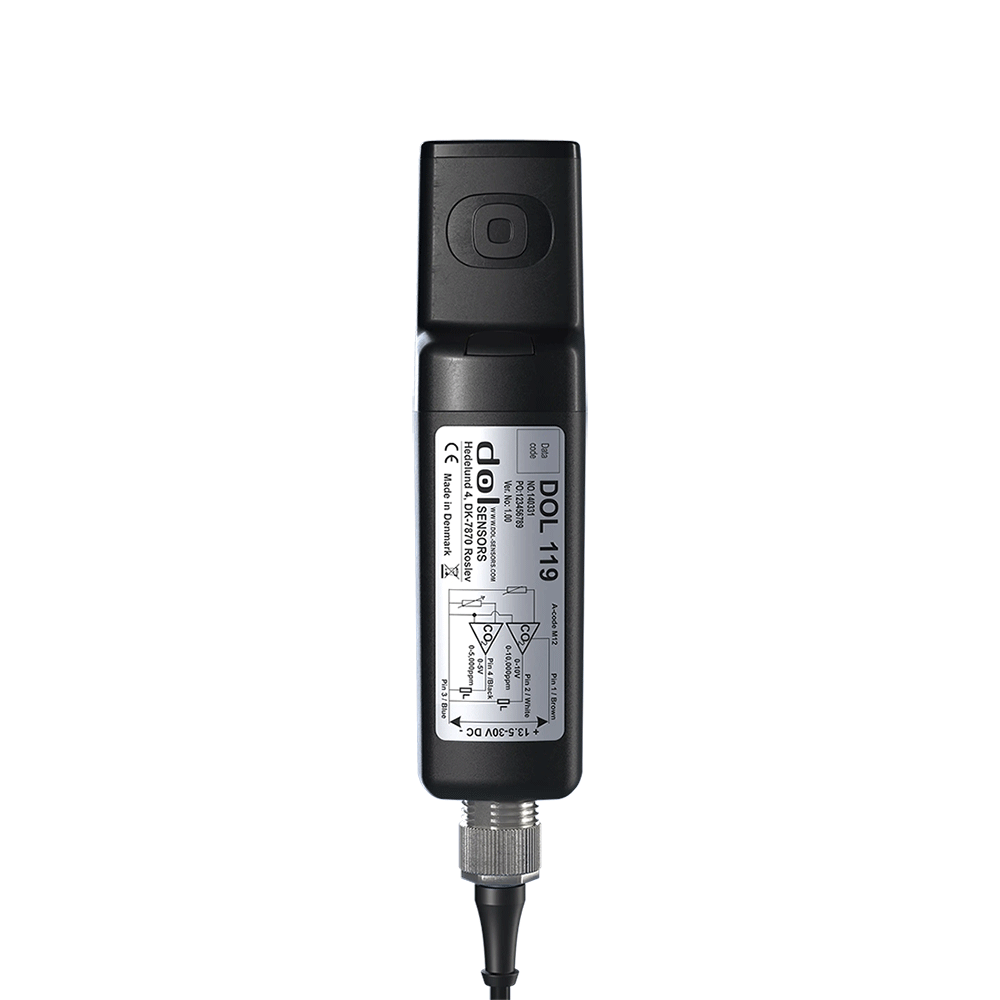
DOL 119_Technical Information_EN
English
Technical Information
DOL 119_4-20mA_Technical Information_EN

Join our newsletter

Stay ahead in livestock production.

Join our newsletter and get industry insights, expert perspectives, and practical strategies for optimizing performance and efficiency.