How to Reduce Feeding Costs

Feed is the single largest expense in pig production, often accounting for 60–70% of total production costs. Managing feed efficiency and cost is therefore critical to improving profitability and long-term sustainability. Below are five expert strategies that can help producers reduce feed costs without compromising growth performance or animal health.

1. Work with Feeding Specialists to Optimize Feed Formulation

Collaborating with a qualified animal nutritionist or feeding specialist is one of the most effective ways to reduce feed costs while maintaining optimal pig performance. These professionals have the technical expertise and access to formulation software that can balance diets precisely for energy, amino acids, vitamins, and minerals — all while minimizing unnecessary expenses.

A feeding specialist can:

  • Design least-cost rations based on the latest ingredient prices and availability, ensuring that every nutrient requirement is met efficiently.
  • Identify cost-effective ingredient substitutions, such as incorporating alternative protein or energy sources that maintain performance but reduce costs.
  • Provide ongoing feed evaluations and adjustments as pigs grow or as market conditions change, preventing over- or under-feeding.

By investing in professional feed advice, producers often achieve better feed efficiency, improved growth rates, and significant savings — results that far outweigh the cost of consultation.

2. Implement Phase Feeding Programs

Pigs have different nutrient requirements at each stage of growth. Feeding a single diet throughout the production period often results in nutrient wastage.

  • Phase feeding involves dividing the growth period into several phases, each with a diet precisely matched to the pigs’ needs.
  • Moving from a two-phase to a four-phase feeding program can reduce feed costs by 3–5% while maintaining growth performance.
  • Split-sex feeding can further enhance efficiency, as barrows and gilts have different nutrient requirements.

Improving feed efficiency requires continuous insight into both animal performance and barn conditions. Learn more about getting control in your pig production.

3. Improve Nutrient Utilization with Feed Additives

Enhancing the digestibility and absorption of nutrients is a practical way to lower overall feed costs. Feed additives such as enzymes, probiotics, and organic acids can help pigs make better use of the nutrients already present in their diets, reducing the need for expensive ingredients.

  • Enzymes can increase the availability of nutrients like phosphorus, protein, and energy from plant-based ingredients.
  • Probiotics and other gut health enhancers support a balanced intestinal environment, improving feed conversion and reducing the incidence of digestive problems.
  • Organic acids can help maintain feed hygiene and promote optimal digestion, particularly in young pigs.

By improving nutrient utilization, these additives help maximize the value of every kilogram of feed, supporting both performance and profitability.

How To Get Strong and Active Pigs
Learn how optimized feed formulation, phase feeding, and improved nutrient utilization can contribute to the foundation of strong and active pigs.
No items found.

4. Reduce Feed Wastage Through Proper Management

Even the best diet formulation can fail to deliver savings if feed wastage occurs.

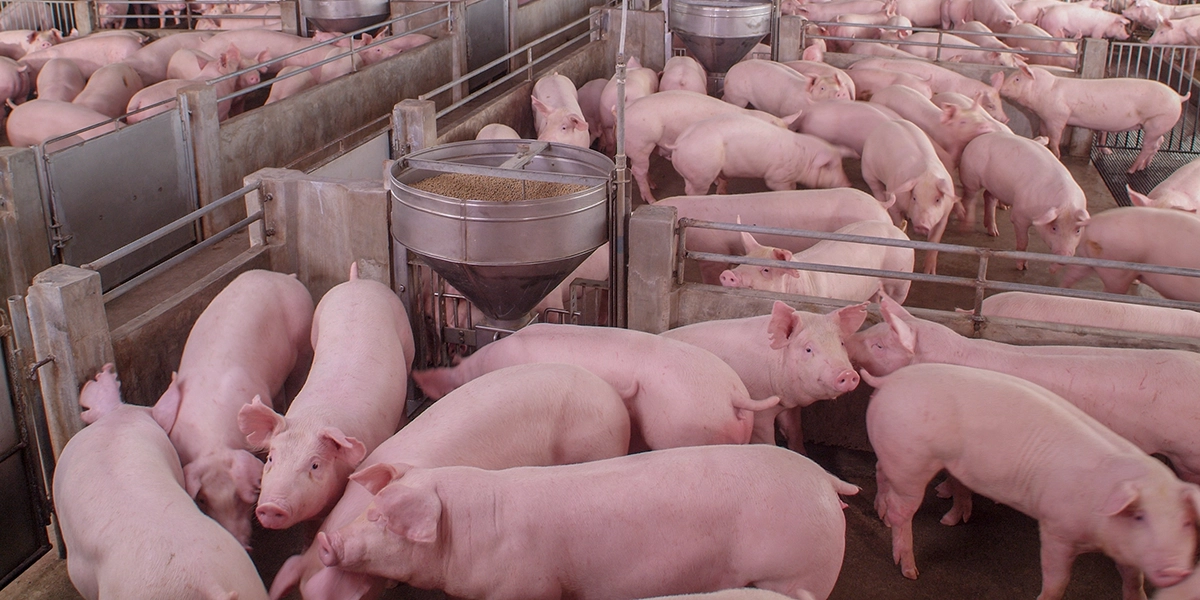
  • Use well-designed feeders that minimize spillage and allow easy adjustment of feed flow.
  • Maintain dry and clean feeding areas to prevent spoilage, especially in humid environments.
  • Train staff to monitor feeder settings and adjust regularly as pigs grow — even a 5% reduction in feed wastage can have a major impact on profitability.

5. Utilize Home-Grown Feed Ingredients

Where feasible, producing and processing some feed ingredients on-farm can substantially lower feed costs.

  • Home-grown cereals (such as maize, barley, or wheat) can replace a portion of commercial feed ingredients.
  • Invest in on-farm milling and mixing to control quality and reduce transportation and handling costs.
  • Work with a qualified nutritionist to ensure that all home-grown ingredients are properly analyzed for nutrient content and potential anti-nutritional factors.

Improve Feed Conversion Ratio in Pig Production
Learn how continuous monitoring helps producers identify developing production challenges through changes in water consumption, growth performance and other key production indicators.

Feed Conversion Ratio (FCR) is a key performance indicator in pig production, measuring how efficiently pigs convert feed into body weight gain. A lower FCR means better efficiency, as less feed is required to produce one kilogram of live weight. Because feed represents the single largest cost in pig production, optimizing FCR is essential for improving profitability while also reducing the environmental footprint of production. Below, we outline the importance of FCR in pig farming and practical strategies to improve it.

Understanding Feed Conversion Ratio in Pig Production

Feed Conversion Ratio is defined as the total amount of feed consumed divided by the live weight gain over a specific period. In pig production, FCR is influenced by factors such as genetics, health status, housing conditions, feeding strategy, and environmental control.

Since feed costs account for a major share of total production expenses, even small improvements in FCR can result in substantial economic gains. Efficient feed utilization also reduces nutrient excretion, contributing to more sustainable pig production.

Strategies to Improve FCR in Pig Production

Effective Feed Management

Precise feed management is critical to achieving optimal FCR in pigs. Feeding strategies must be aligned with the pigs’ growth stages, nutritional requirements, and daily feeding behavior. Inconsistent feed availability or incorrect rationing can lead to reduced growth rates and poorer feed efficiency.

A reliable and continuous feed supply is essential. Accurate monitoring of feed levels helps prevent interruptions, overfeeding, and uneven feed distribution. To support this, the use of robust capacitive sensors designed for livestock environments enables precise feed level measurement in bins and silos, ensuring timely refilling and consistent feed delivery.

Proper feed storage is equally important. Feed quality can deteriorate due to moisture, temperature fluctuations, or spoilage, negatively affecting intake and digestibility. Well-designed storage systems and feeder designs that minimize spillage and segregation help reduce feed waste and maintain ration consistency.

To protect stored grains and raw materials, monitoring moisture and temperature is crucial. Wireless grain sensors allow producers to detect unfavorable storage conditions early, preventing spoilage, mold growth, and nutrient losses that would otherwise compromise feed efficiency and pig performance.

How Better Barn Environments Support Healthy Pig Growth
Learn how continuous monitoring helps producers identify developing production challenges through changes in water consumption, growth performance and other key production indicators.

Factors such as temperature, air quality, and overall barn stability shape how pigs behave, how efficiently they convert feed, and how vulnerable they are to disease. Modern production systems increasingly rely on real-time environmental monitoring to maintain these conditions, ensuring pigs live in a stable, predictable climate that supports their biological needs.

Why the Barn Matters for Growth

Pigs are highly sensitive to their surroundings. Even small fluctuations in temperature or air quality trigger stress responses which reduce feed intake, slow weight gain, and increase susceptibility to illness. A well-managed environment supports:

  • Optimal feed conversion - Pigs use energy for growth instead of fighting heat or cold stress
  • Stronger immune function - Stable conditions reduce respiratory challenges and pathogen pressure
  • Better welfare - Comfortable pigs are calmer, more active, and show fewer stress-related behaviors
  • Lower mortality and medication use - Healthy environments reduce disease outbreaks and treatment needs

These benefits translate directly into improved productivity and profitability for producers.

Key Environmental Factors That Influence Pig Growth

Temperature Stability

Continuous temperature monitoring helps producers maintain the ideal climate for each growth stage - from weaners to finishers.

Air Quality and Ventilation

Air quality is one of the most overlooked drivers of pig health. High levels of ammonia, CO₂, dust, and humidity can damage the respiratory system and increase disease risk.

Humidity Control

Humidity interacts with temperature influencing pig comfort. High humidity makes barns feel warmer, while low humidity increases dust levels in the air.

Noise and Stress Reduction

Environmental stressors - such as sudden noises, drafts, or inconsistent lighting - can disrupt feeding patterns and increase aggression. A calm, predictable environment supports steady growth and reduces injuries.

Pig Production's Global Transformation
Learn how continuous monitoring helps producers identify developing production challenges through changes in water consumption, growth performance and other key production indicators.

Pig production has come a long way from its humble beginnings. What started thousands of years ago with wild pigs foraging in forests has evolved into a high-tech, globally connected industry. Today, pork is the world’s most consumed meat, feeding billions and supporting millions of livelihoods. Yet this remarkable transformation also raises critical questions about sustainability, animal welfare, and the future of food production.

From Forest to Farm: The Early Days of Pig Domestication

Pigs were among the first animals domesticated by humans — evidence suggests domestication began over 9,000 years ago in parts of Asia and Europe. Early farmers valued pigs for their adaptability, rapid reproduction, and ability to thrive on food scraps and farm by-products.
For centuries, pig rearing was small-scale and local, with families raising pigs for household consumption or small community markets.

These early systems were low-input and integrated into mixed farming, contributing to circular food economies long before the concept of “sustainability” existed.

Industrialization and Global Expansion

The 20th century marked a turning point. Advances in genetics, nutrition, and disease control transformed pig farming into an industrial-scale enterprise. Countries such as China, the United States, Spain, and Brazil emerged as major producers, developing specialized breeding lines and modern housing systems to maximize efficiency.

Automation, biosecurity, and precision feeding technologies further boosted productivity, allowing producers to raise more pigs with fewer resources.
As a result, pork became a cornerstone of global agriculture — affordable, versatile, and accessible to a growing population.

The Modern Mega Farm Era

Today’s pig farms bear little resemblance to those of the past. Many are highly sophisticated operations, equipped with climate-controlled housing, automated feeding, and real-time data monitoring systems.
Precision agriculture enables farmers to track growth rates, feed efficiency, and environmental impact with incredible accuracy.

This shift has made pig production one of the most technologically advanced sectors in livestock farming. Yet it has also brought new scrutiny.

Selected Sensors

No items found.

Documents

No items found.

Join our newsletter

Stay ahead in livestock production.

Join our newsletter and get industry insights, expert perspectives, and practical strategies for optimizing performance and efficiency.