Pig Production's Global Transformation

Pig production has come a long way from its humble beginnings. What started thousands of years ago with wild pigs foraging in forests has evolved into a high-tech, globally connected industry. Today, pork is the world’s most consumed meat, feeding billions and supporting millions of livelihoods. Yet this remarkable transformation also raises critical questions about sustainability, animal welfare, and the future of food production.

From Forest to Farm: The Early Days of Pig Domestication

Pigs were among the first animals domesticated by humans — evidence suggests domestication began over 9,000 years ago in parts of Asia and Europe. Early farmers valued pigs for their adaptability, rapid reproduction, and ability to thrive on food scraps and farm by-products.
For centuries, pig rearing was small-scale and local, with families raising pigs for household consumption or small community markets.

These early systems were low-input and integrated into mixed farming, contributing to circular food economies long before the concept of “sustainability” existed.

Industrialization and Global Expansion

The 20th century marked a turning point. Advances in genetics, nutrition, and disease control transformed pig farming into an industrial-scale enterprise. Countries such as China, the United States, Spain, and Brazil emerged as major producers, developing specialized breeding lines and modern housing systems to maximize efficiency.

Automation, biosecurity, and precision feeding technologies further boosted productivity, allowing producers to raise more pigs with fewer resources.
As a result, pork became a cornerstone of global agriculture — affordable, versatile, and accessible to a growing population.

The Modern Mega Farm Era

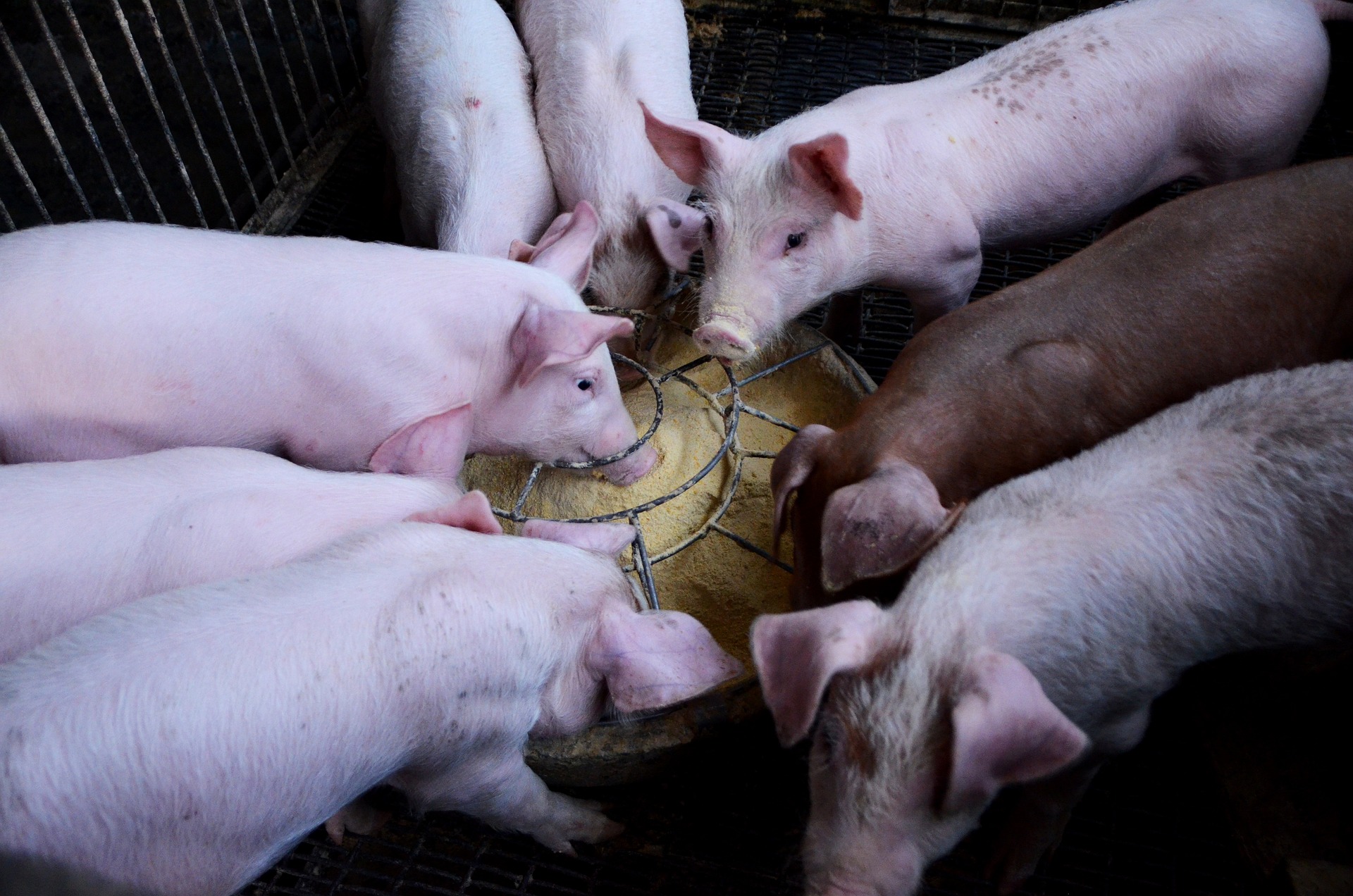
Today’s pig farms bear little resemblance to those of the past. Many are highly sophisticated operations, equipped with climate-controlled housing, automated feeding, and real-time data monitoring systems.
Precision agriculture enables farmers to track growth rates, feed efficiency, and environmental impact with incredible accuracy.

This shift has made pig production one of the most technologically advanced sectors in livestock farming. Yet it has also brought new scrutiny.

How To Get Control In Your Pig Production
Discover how innovation, automation, and sustainability are reshaping pig production around the world.
No items found.

Balancing Growth with Responsibility

As global production expands, so do the challenges. Sustainability, animal welfare, and antibiotic use are under increasing public and regulatory attention. Consumers are demanding transparency — wanting to know how animals are raised, what they eat, and how farms impact the planet.

To meet these expectations, producers are adopting practices such as:

  • Improved housing and welfare systems
  • Precision feeding to reduce waste and emissions
  • Renewable energy integration on farms
  • Circular economy models that recycle nutrients and by-products

Innovation is no longer just about production efficiency — it’s about producing more responsibly.

The Future of Pig Production

The next era of pig farming will likely focus on sustainability, resilience, and digital transformation. Smart farming tools, artificial intelligence, and genetic research are opening new frontiers — from climate-adaptive breeds to carbon-neutral production systems.

Meanwhile, shifts in consumer behavior — toward health, ethics, and environmental impact — are shaping how pork will be produced, processed, and marketed in the decades ahead.

Producers who embrace change and lead with transparency will be the ones defining the future of this essential industry.

Feed and Gut Health: The Foundation of Strong, Active Pigs
Learn how continuous monitoring helps producers identify developing production challenges through changes in water consumption, growth performance and other key production indicators.

Healthy pigs start with a healthy gut. When digestion works smoothly and nutrients are absorbed efficiently, pigs grow faster, stay more resilient, and remain active throughout the production cycle. Gut health is one of the biggest drivers of performance, and one of the easiest to overlook.

Why Gut Health Shapes Performance

Feed Quality Sets the Tone

Balanced protein, the right fiber levels, and consistent feed structure all support stable digestion. Clean water and high-quality raw materials help pigs maintain a healthy gut and steady appetite.

Early Warnings in Pig Production Help Prevent Costly Losses
Learn how continuous monitoring helps producers identify developing production challenges through changes in water consumption, growth performance and other key production indicators.

Pig production is currently under significant pressure across most regions of the world. Volatile pig prices and increasing requirements for animal welfare and sustainability are steadily eroding margins. At the same time, producers are expected to deliver consistent performance under conditions that are becoming more complex and less predictable.

For OEMs supplying equipment, systems and technology to the pig production industry, this creates a clear challenge: how to help customers maintain profitability and stability in an environment where small deviations in performance can quickly turn into substantial financial losses.

Disease pressure has reshaped global pig production

Disease outbreaks have been one of the most disruptive forces in pig production over the past decade. African Swine Fever (ASF), PRRS and other endemic diseases have had a measurable impact on global pork supply due to the sheer scale of production losses.

Between 2023 and 2025, global losses of slaughter pigs are estimated at 23–40 million animals annually, corresponding to approximately 1.8–2.8 percent of total global pig production. During the peak crisis period from 2019 to 2021, when ASF spread widely across Asia, annual losses rose dramatically to 45–70 million slaughter pigs, equivalent to 3.5–5.0 percent of global production.

These figures illustrate why disease prevention and early detection have moved from being operational concerns to becoming strategic priorities. Production losses on this scale have not only reduced supply but also contributed to increased price volatility, making revenue planning and long-term investment decisions significantly more difficult for producers.

Economic pressure amplifies the cost of late reactions

When margins are tight, the cost of reacting too late becomes disproportionately high. Disease, stress, suboptimal climate or feed changes rarely appear overnight. In most cases, performance deterioration starts gradually, through reduced feed intake, slower growth, increased variation or subtle behavioral changes.

However, these early signals are often missed in traditional production setups. Problems are typically detected only once mortality increases, feed conversion worsens or veterinary intervention becomes necessary. At that point, the financial damage has already occurred.

For OEMs, this raises a fundamental question: how can technology provide earlier insight into performance deviations, so corrective actions can be taken before losses accumulate?

Higher welfare expectations and reduced antibiotic use raise the bar

Consumer expectations are also changing rapidly. Across key markets, demand is growing for pork produced with higher animal welfare standards and minimal use of antibiotics. Retailers, processors and regulators increasingly require documentation to prove that welfare targets are being met and that antibiotic use is justified and controlled.

This development places additional pressure on producers to manage health proactively rather than reactively. Good welfare outcomes depend on stable environments, early intervention and consistent management, all of which benefit from better visibility into daily production performance.

For OEMs, the ability to support customers with data-driven insights that link welfare, health and productivity is becoming a critical differentiator.

Decrease Low Weight Gain In Pig Production
Learn how continuous monitoring helps producers identify developing production challenges through changes in water consumption, growth performance and other key production indicators.

Understanding the Impact of Ammonia on Pig Weight Gain

In the realm of pig production, achieving optimal weight gain is crucial for maximizing profitability and ensuring the overall health and performance of the herd. However, low weight gain in pigs can be a persistent challenge for producers, and one often overlooked factor contributing to this issue is the presence of elevated levels of ammonia in the swine housing environment.

Ammonia, a byproduct of pig waste, can accumulate in housing facilities, negatively impacting respiratory health, nutrient utilization, and ultimately, weight gain in pigs. In this article, we will explore the impact of ammonia on pig weight gain and discuss strategies for mitigating its effects to promote healthier and more productive herds.

Respiratory Health Risks

Ammonia is a potent respiratory irritant that can cause irritation and inflammation in the respiratory tract of pigs. Prolonged exposure to high levels of ammonia can lead to respiratory distress, compromised lung function, and increased susceptibility to respiratory infections such as pneumonia. Respiratory issues induced by ammonia inhalation can result in reduced feed intake, impaired nutrient absorption, and ultimately, poor weight gain in affected pigs.

Stress Response

Exposure to elevated levels of ammonia can induce stress responses in pigs, triggering the release of stress hormones such as cortisol. Chronic stress not only compromises immune function but also disrupts metabolic processes and growth hormone regulation. Pigs experiencing prolonged stress due to ammonia exposure may exhibit reduced appetite, decreased nutrient utilization, and impaired growth performance, leading to suboptimal weight gain and production outcomes.

Nutrient Utilization

Ammonia toxicity can interfere with nutrient utilization and metabolism in pigs, particularly protein digestion and amino acid absorption. Elevated levels of ammonia in the environment can disrupt the balance of gut microflora, leading to gut dysbiosis and impaired nutrient absorption in the gastrointestinal tract. Consequently, pigs may experience reduced growth efficiency despite consuming adequate feed, as their ability to convert nutrients into body mass is compromised.

Selected Sensors

No items found.

Documents

No items found.

Join our newsletter

Stay ahead in livestock production.

Join our newsletter and get industry insights, expert perspectives, and practical strategies for optimizing performance and efficiency.