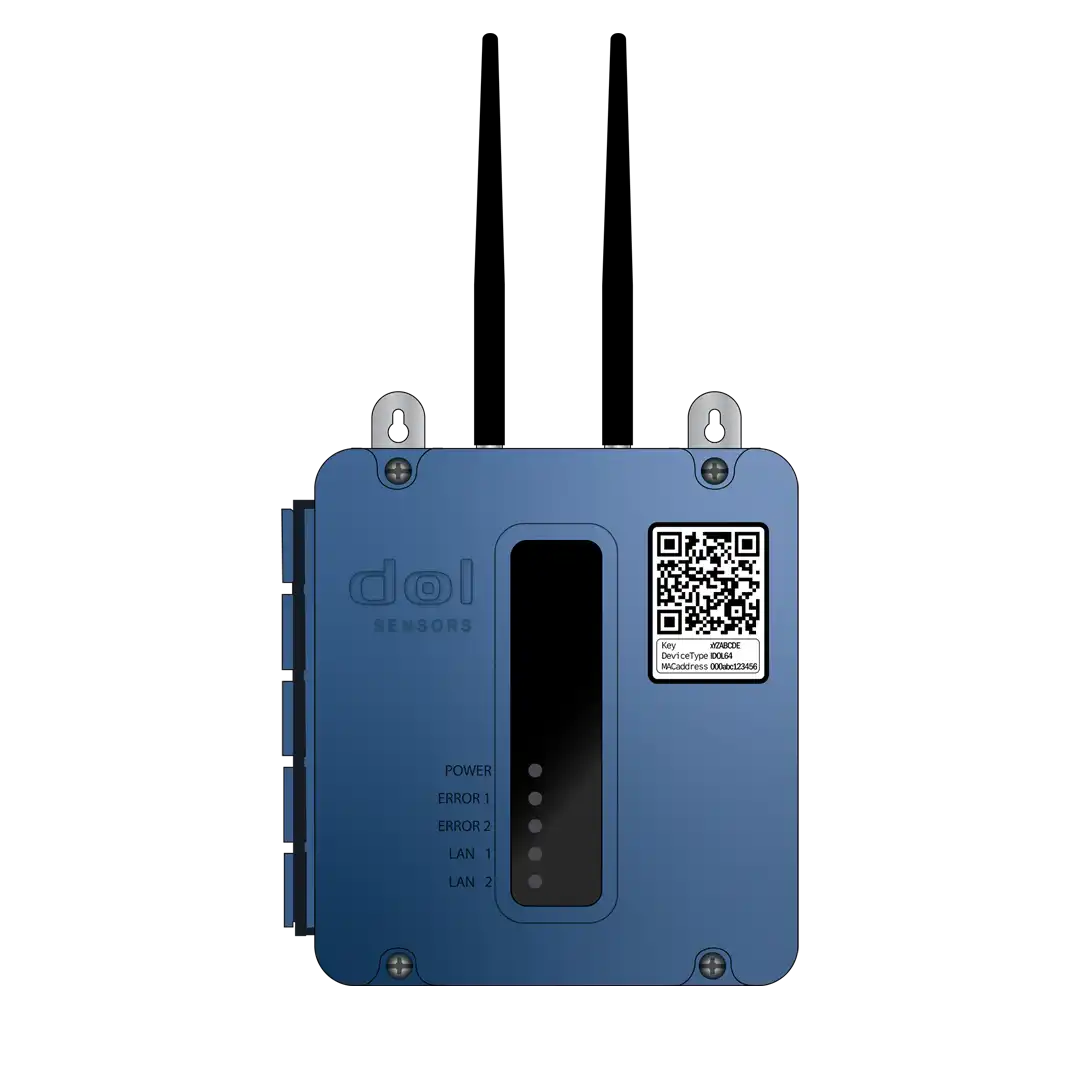
Managing sensors across large or remote agricultural sites just got simpler. The iDOL 64 LoRa Gateway is built for farms and greenhouses where cables need to be kept at the minimum.
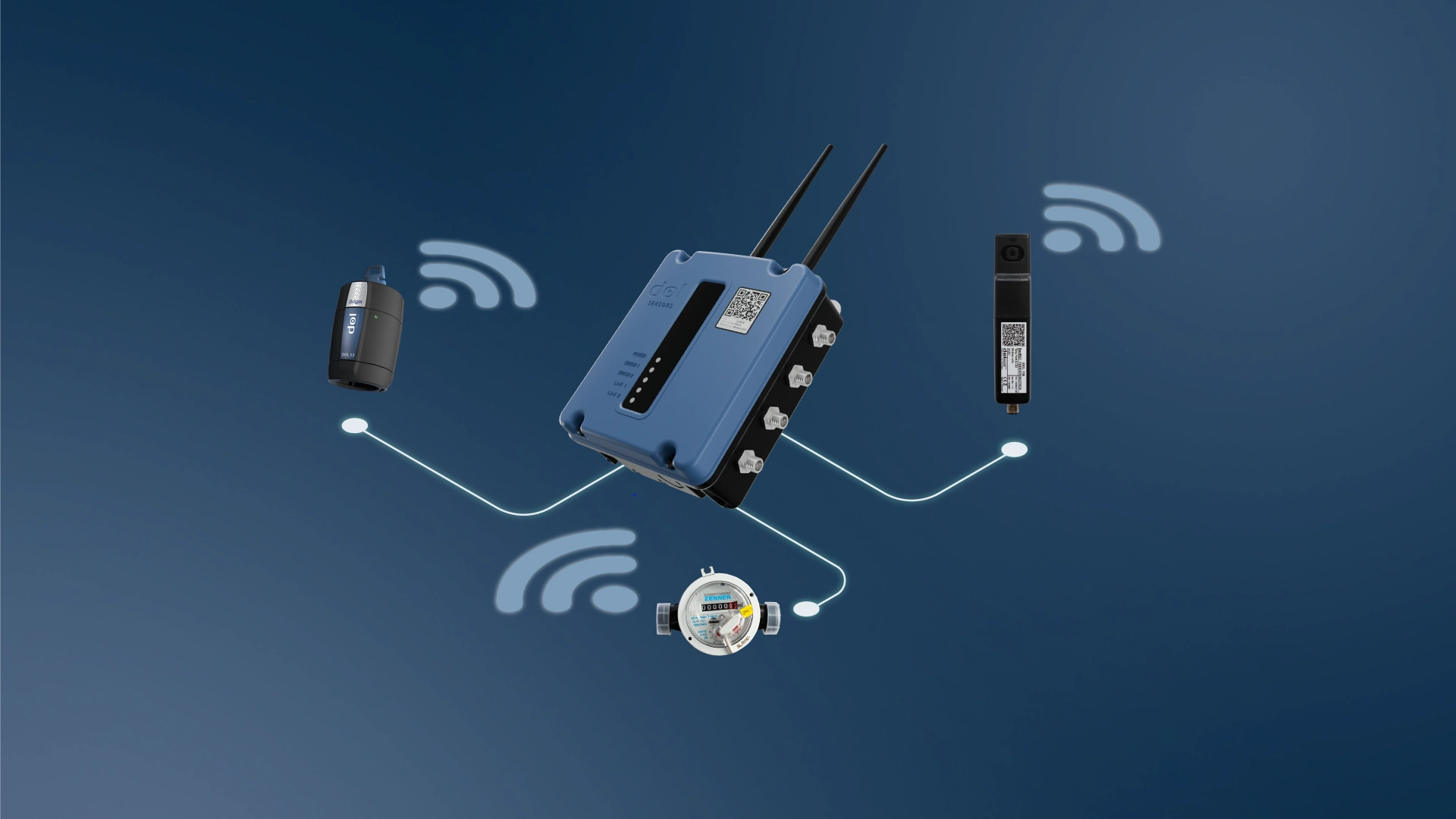
The iDOL 64 LoRa Gateway solves this by connecting all your sensors wirelessly via LoRaWAN. The only cables you need are power cables — everything else happens over the air. An integrated modem with a data SIM card handles all communication between your sensors and the dol-sensors Cloud, so continuous data flows straight to your server through our API. No internet connection on-site needed.
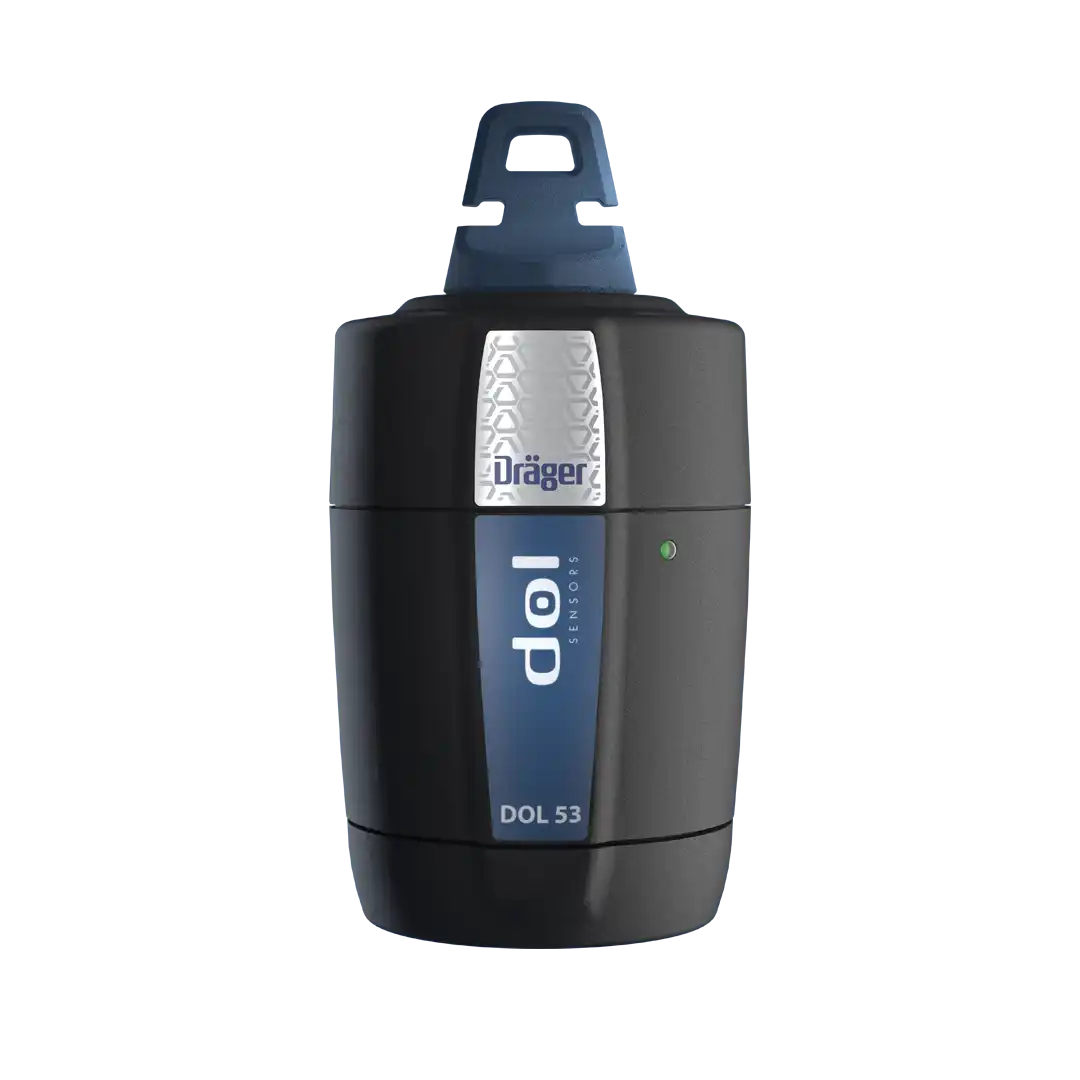
The gateway is designed to support both connection types simultaneously. You can connect sensors directly via cable alongside wireless LoRaWAN sensors — giving you full flexibility for your specific setup. Up to 12 analog 0–10V sensors can be connected to a single gateway via wire.
The number of wireless LoRa sensors you can add depends on several factors specific to your environment.
The iDOL 64 LoRa Gateway is designed for fast, hassle-free installation.
Mount the antennas attached with the iDOL 64
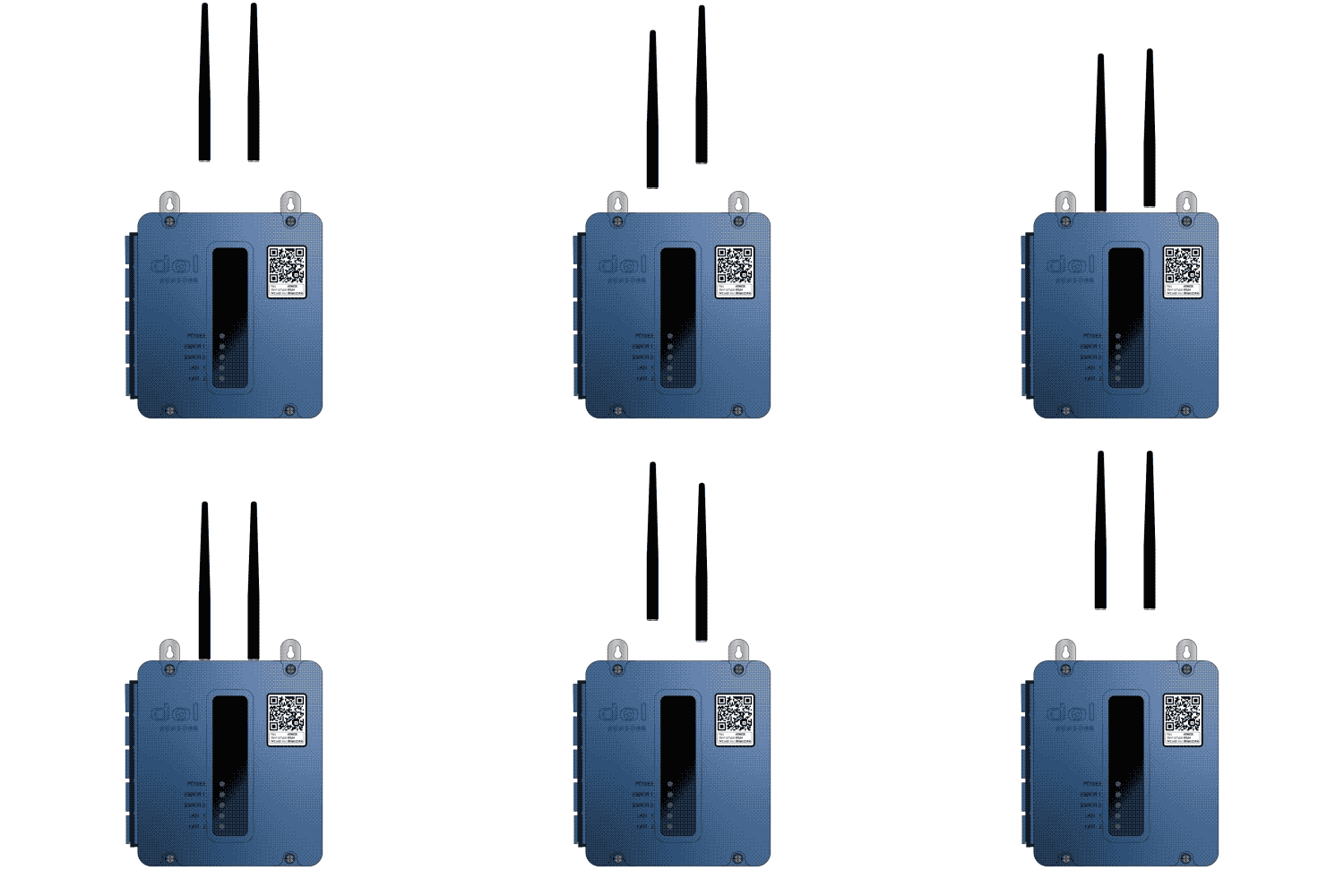
Install the gateway on the wall. Ensure that the gateway is as high as possible in order to have the best connection.
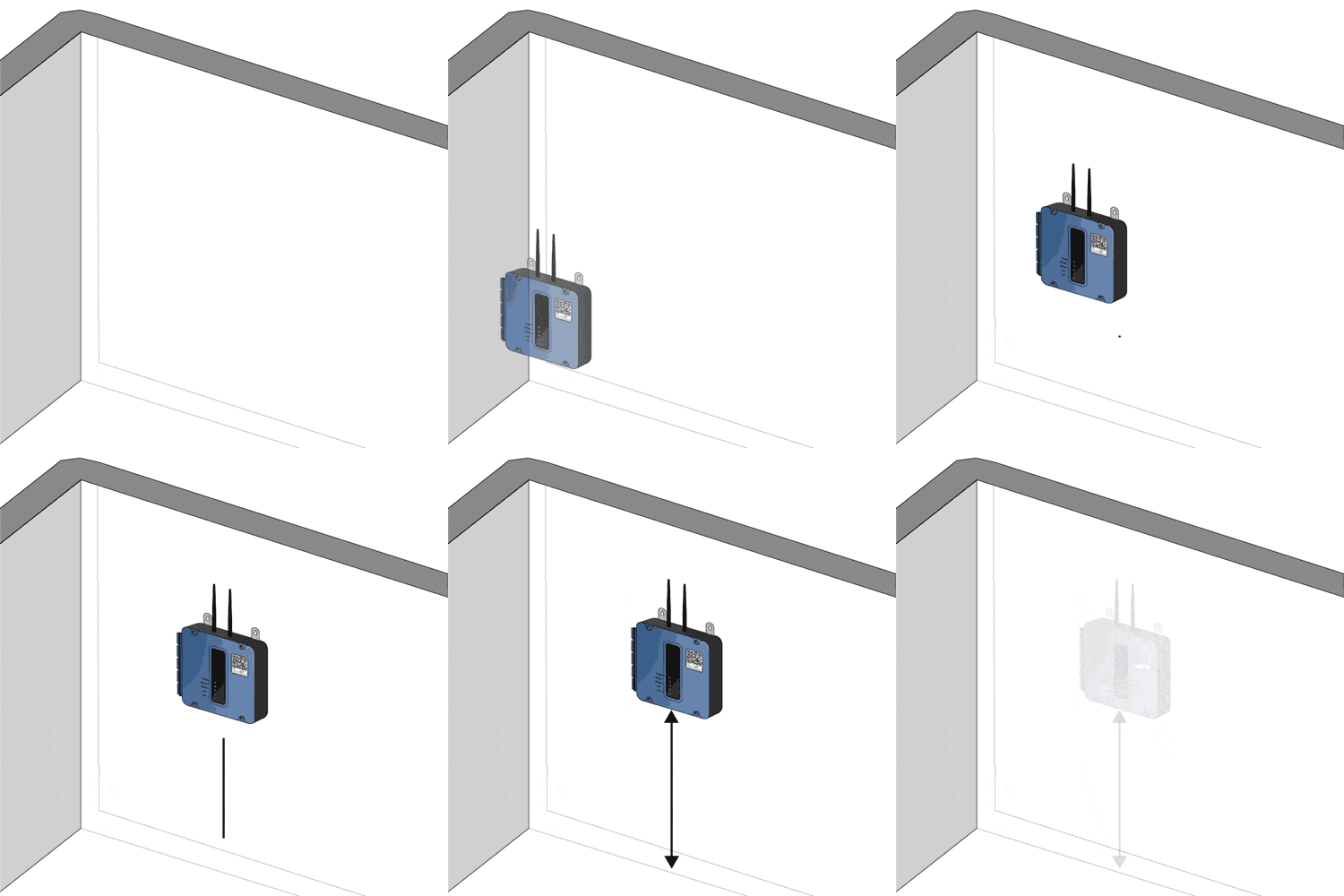
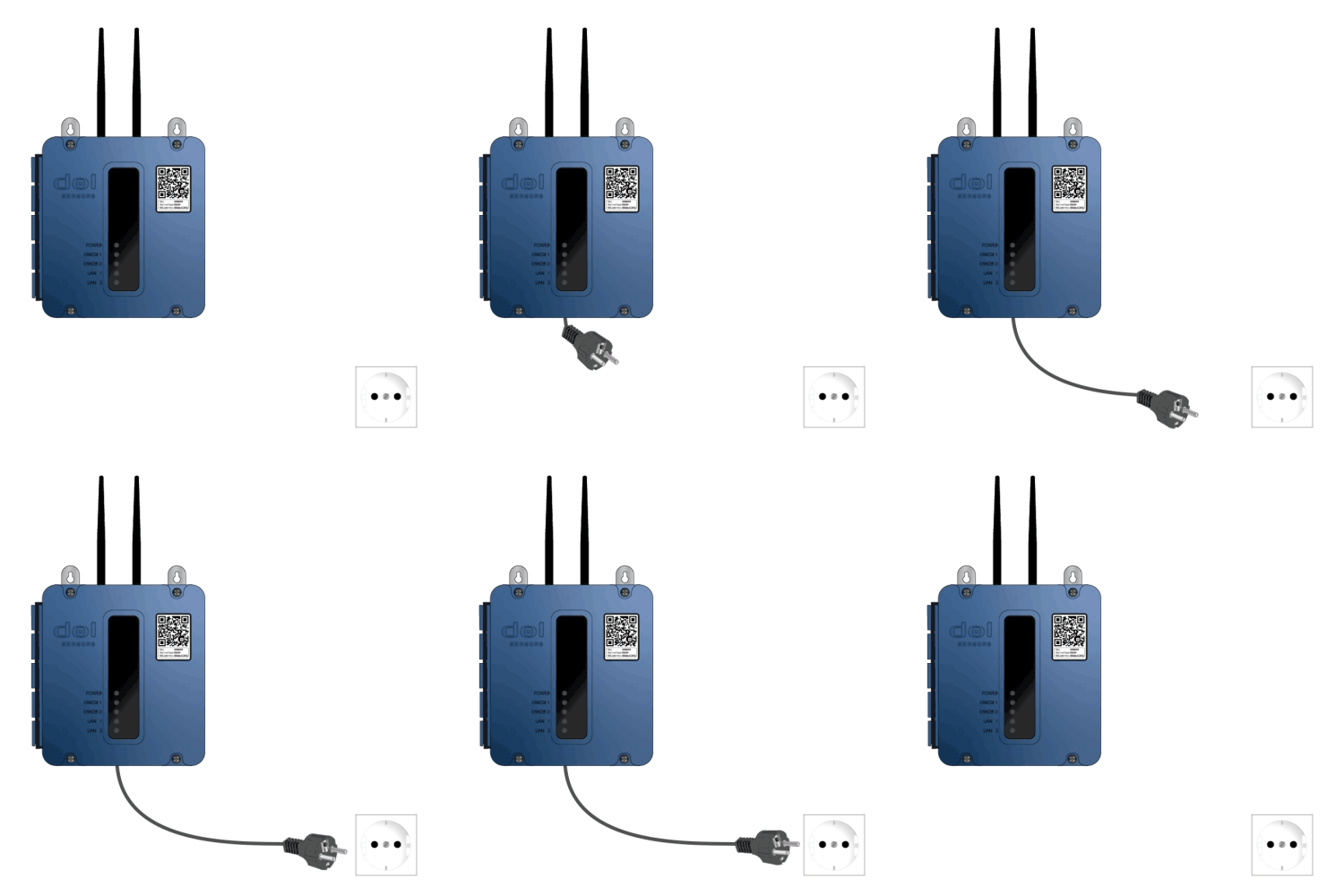
Connect device to power. iDOL 64 is going to turn on automatically, it's that easy
The future of livestock farming is data-driven. By turning accurate, real-time insights into actionable decisions, producers can improve animal health and welfare, optimize performance, and build more sustainable operations. Data is becoming the foundation for smarter farming and a more resilient future.
For generations, livestock management has relied heavily on visual observations and routine inspections. Experienced farmers can often identify changes in animal behavior, health, or performance through daily interactions with their animals.
However, modern livestock operations are becoming larger and more complex. Managing hundreds or thousands of animals makes it increasingly difficult to detect subtle changes that may indicate health issues, stress, or production inefficiencies.
Many problems develop gradually and may not become visible until they have already affected animal welfare or farm performance. Delayed detection can result in increased treatment costs, reduced productivity, and preventable losses.
Monitoring systems help bridge this gap by providing continuous observation and objective data that support faster and more informed decisions.
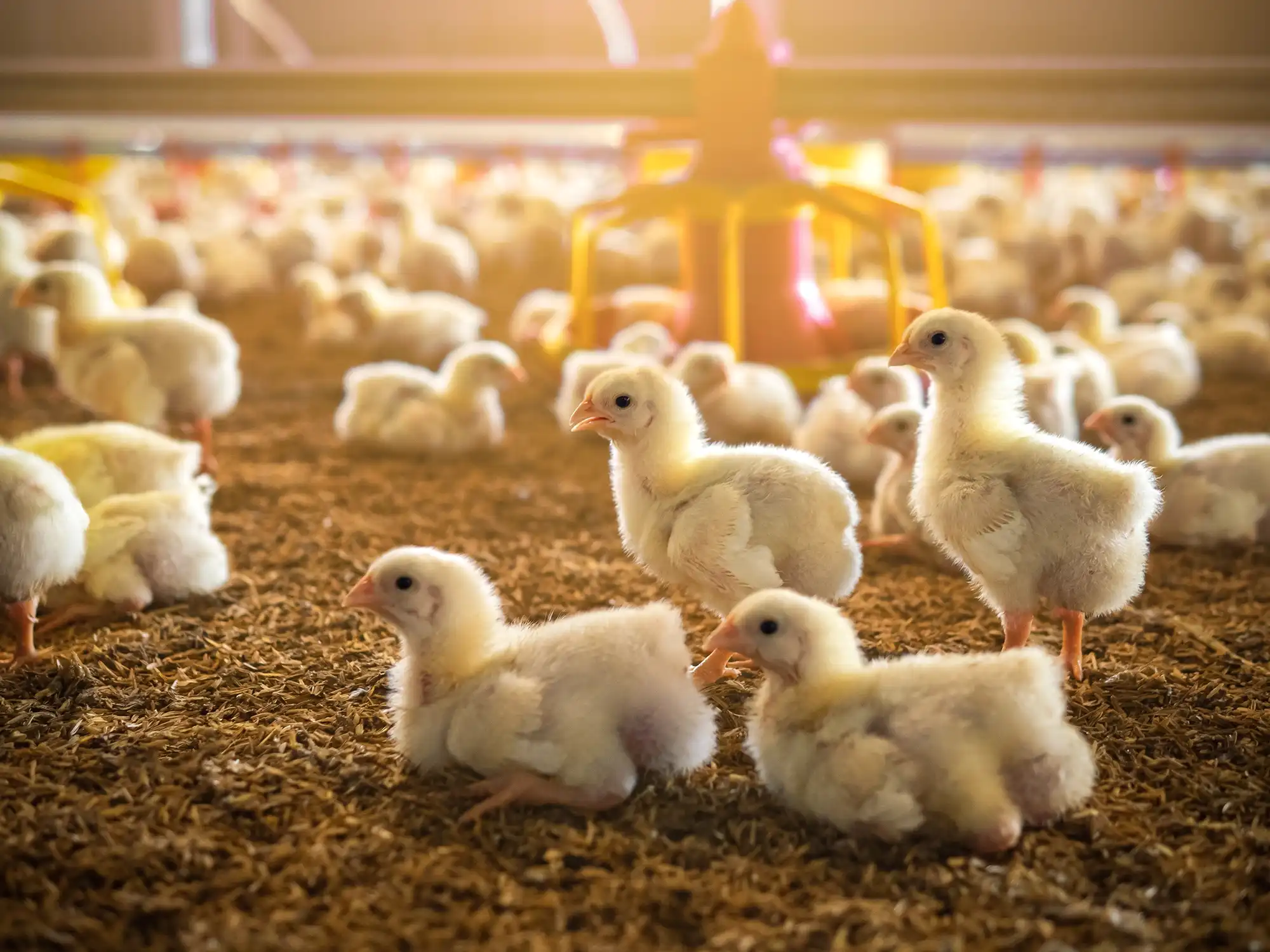
It is well-proven that air polution due to high ammonia levels in broiler production results in a higher FCR, lower gain, and poorer animal welfare. Birds being exposed to high levels of ammonia can suffer from respiratory diseases, ammonia blindness, infections with Newcastle, the bronchitis virus and parasites, burned skin and feed, nutritional stress, suffocation, and even death. These sufferings will of course decrease production and increase breeding costs.
Early action benefits the productivity of the broilers as well as animal welfare. Thus, constantly monitoring the level of ammonia is essential for the poultry production. Furthermore, monitoring the level of humidity is also important, since a too high level of humidity in the livestock house can cause formation of ammonia.
There are different ways to minimize the level of ammonia in a poultry production. One is ensuring a good quality of litter, air flow and ventilation in the house, a low level of humidity, and keeping the temperature down. Minimizing the level of ammonia have a major impact on the financial yield of the production. In fact, studies* have shown that ammonia concentrations as low as 25 ppm can reduce bird weights at 28 days of age by 2-7% while 50 ppm ammonia has been shown to reduce bird weights from 16-19%. An increased ammonia concentration can cut profits by $3,000 or more per batch in a livestock house with 25,000 broilers.
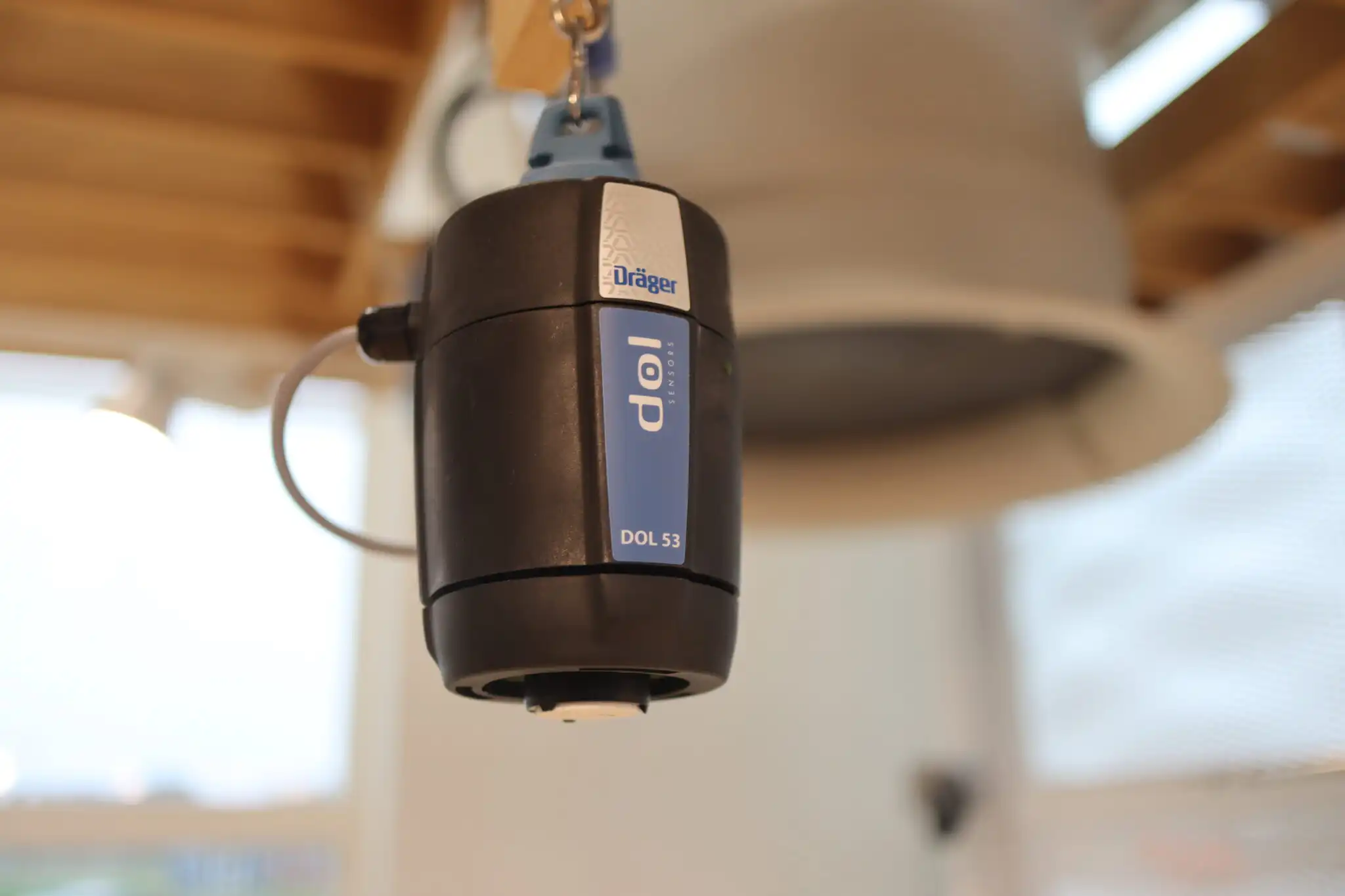
With dol-sensors’ ammonia sensors you can continuously monitor ammonia levels with great accuracy. Combined with a farm controller, the ammonia sensors can help ensuring automation of the ventilation system.
*Source: “Ammonia in the Atmosphere during Brooding Affects Performance of Broiler Chickens”, F. N. REECE, B. D. LOTT, and J. W. DEATON and “Poultry Housing Tips”, Volume 32, No. 1, University of Georgia
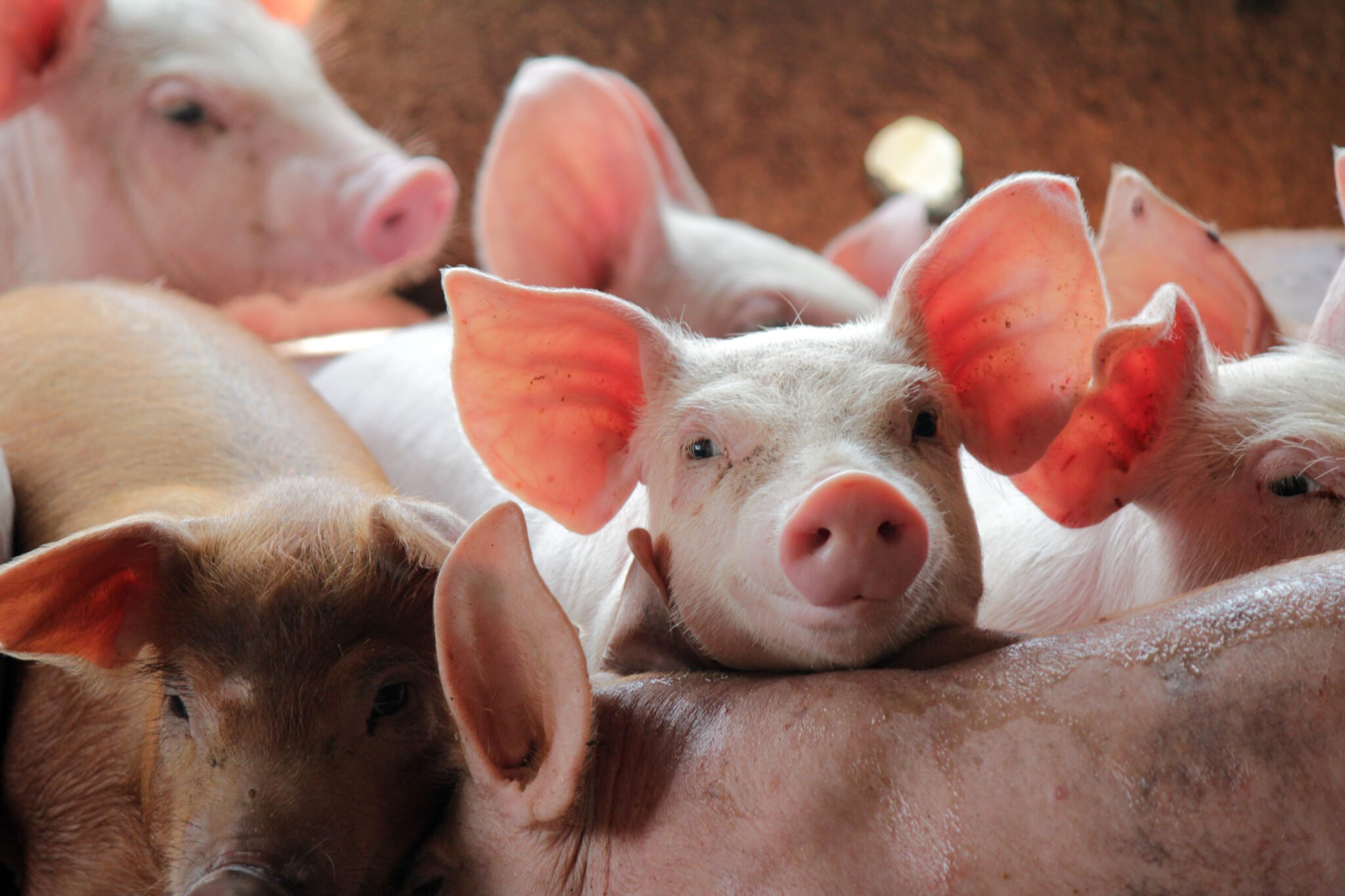
Raising pigs is a significant investment, both financially and in terms of resources. One of the key factors in ensuring the health and productivity of your pigs is providing an optimum environment. A well-managed environment not only promotes good health but also enhances the overall wellbeing of the pigs, leading to better growth rates and quality produce.
Pigs, like any other animals, have specific environmental needs. These include the right temperature, humidity, ventilation, and space. Understanding and meeting these needs is crucial for their health and growth.
Pigs are sensitive to temperature changes. Young piglets require a warmer environment as they cannot regulate their body temperature efficiently. As they grow, the optimum temperature can be gradually reduced. Overheating or chilling can lead to health issues and should be meticulously managed. To ensure that the temperature is kept stable and at the right level throughout the lifecycle of the pics, farm managers can use well-tested and accurate temperature sensors, to deliver data for the farm controller. The farm controller can automate the heating and cooling system, so that the temperature is optimum at all stages.
Stay ahead in livestock production.
Join our newsletter and get industry insights, expert perspectives, and practical strategies for optimizing performance and efficiency.