The Hidden Cost of CO₂ in Pig Barns

Did you know that high CO₂ levels inside pig housing don’t just affect air quality — they quietly eat into your profits? Carbon dioxide (CO₂) is often overlooked in ventilation management, but it can have a significant impact on animal performance, energy efficiency, and even worker health. From slower growth rates and higher veterinary costs to reduced feed efficiency and fatigue among staff, poor barn air can be surprisingly costly.

Where Does CO₂ Come From in Pig Housing?

In pig barns, CO₂ primarily originates from two sources:

  1. Animal respiration – Pigs naturally exhale CO₂ as part of normal breathing. The more pigs in a barn, the higher the concentration.
  2. Combustion systems – Gas-fired heaters used for temperature control can contribute additional CO₂, especially if ventilation is inadequate.

Without proper airflow, CO₂ can accumulate quickly — particularly in cold seasons when barns are tightly sealed to conserve heat.

Why High CO₂ Levels Matter

While CO₂ itself is not toxic at typical barn levels, concentrations above 3,000 ppm can begin to affect animal health and performance. Prolonged exposure may lead to:

  • Reduced oxygen availability, causing pigs to breathe faster and use more energy.
  • Slower growth rates, as pigs prioritize maintenance over weight gain.
  • Weakened immune systems, increasing susceptibility to respiratory infections.
  • Behavioral changes, such as reduced feed intake or restlessness.

High CO₂ also impacts humans working in the barn — leading to fatigue, headaches, and reduced concentration, all of which can decrease efficiency and safety.

The Economic Impact of Poor Air Quality

Even moderate CO₂ elevations can quietly erode profitability. Producers may notice:

  • Increased feed costs per kilogram of gain — as pigs convert feed less efficiently.
  • Higher veterinary expenses — due to respiratory diseases or stress-related conditions.
  • Energy inefficiencies — when heating and ventilation systems are not properly balanced.
  • Reduced labor productivity — as workers experience discomfort in poorly ventilated environments.

These hidden losses can add up over time, making air quality management a smart economic decision — not just an animal welfare one.

The Hidden Role of CO2
Poor ventilation and high CO₂ levels can affect pig performance, welfare, and production costs.

Monitoring and Managing CO₂ Levels

Modern technology makes it easier than ever to monitor and control barn air quality. Automated ventilation systems equipped with CO₂ sensors can adjust airflow in real time to maintain optimal conditions.

Key strategies include:

  • Regular ventilation maintenance to ensure fans, inlets, and filters function properly.
  • Balancing heating and airflow, avoiding the temptation to reduce ventilation during cold weather.
  • Using CO₂ monitors as part of a comprehensive environmental management plan.
  • Periodic calibration and data logging to identify problem areas in the barn.

Striking the Right Balance

Effective ventilation isn’t about simply increasing airflow — it’s about achieving a balance between air quality, temperature, and energy use. Properly designed systems can remove excess CO₂, humidity, and dust without wasting heat or driving up costs.

By focusing on air quality management, producers can see tangible improvements in pig growth rates, feed efficiency, and overall herd health — all while creating a more comfortable working environment.

Ammonia Sensors
Learn how continuous monitoring helps producers identify developing production challenges through changes in water consumption, growth performance and other key production indicators.

The Impact of Ammonia on Poultry Production

It is well-proven that air polution due to high ammonia levels in broiler production results in a higher FCR, lower gain, and poorer animal welfare. Birds being exposed to high levels of ammonia can suffer from respiratory diseases, ammonia blindness, infections with Newcastle, the bronchitis virus and parasites, burned skin and feed, nutritional stress, suffocation, and even death. These sufferings will of course decrease production and increase breeding costs.

Why Continuous Ammonia Monitoring Matters

Early action benefits the productivity of the broilers as well as animal welfare. Thus, constantly monitoring the level of ammonia is essential for the poultry production. Furthermore, monitoring the level of humidity is also important, since a too high level of humidity in the livestock house can cause formation of ammonia.

There are different ways to minimize the level of ammonia in a poultry production. One is ensuring a good quality of litter, air flow and ventilation in the house, a low level of humidity, and keeping the temperature down. Minimizing the level of ammonia have a major impact on the financial yield of the production. In fact, studies* have shown that ammonia concentrations as low as 25 ppm can reduce bird weights at 28 days of age by 2-7% while 50 ppm ammonia has been shown to reduce bird weights from 16-19%. An increased ammonia concentration can cut profits by $3,000 or more per batch in a livestock house with 25,000 broilers.

With dol-sensors’ ammonia sensors you can continuously monitor ammonia levels with great accuracy. Combined with a farm controller, the ammonia sensors can help ensuring automation of the ventilation system.

*Source: “Ammonia in the Atmosphere during Brooding Affects Performance of Broiler Chickens”, F. N. REECE, B. D. LOTT, and J. W. DEATON and “Poultry Housing Tips”, Volume 32, No. 1, University of Georgia

Agricultural CO2 Sensors
Learn how continuous monitoring helps producers identify developing production challenges through changes in water consumption, growth performance and other key production indicators.

Understanding Agricultural CO2 Sensors

Agricultural CO2 sensors are pivotal tools in the realm of modern farming. These devices measure the concentration of carbon dioxide in the atmosphere, providing invaluable data for farmers and farm managers.

Plants absorb carbon dioxide during photosynthesis, a process that fuels their growth. Monitoring CO2 levels in a closed environment such as a greenhouse ensures that crops have an optimal environment to thrive, leading to better yields and healthier produce.

For animals, it is extremely important to maintain a low CO2 level in the atmosphere inside the livestock house. Animals are dependent on oxygen and carbon dioxide in high concentrations can give them difficulty breathing, descrease production and even raise mortality.

The Evolution of CO2 Monitoring in Agriculture

The journey of CO2 monitoring in agriculture is a testament to human ingenuity. In the early days, farmers relied on rudimentary methods and intuition to gauge the health of their crops and livestock. However, as technology advanced, so did the methods of monitoring. The introduction of CO2 sensors revolutionized farming, allowing for precision agriculture. These advancements meant that farmers could now get real-time data, leading to more informed decisions and improved crop yields and production outcomes.

Installing and Maintaining Your Agricultural CO2 Sensors

Proper installation and maintenance of agricultural CO2 sensors are crucial for accurate readings.

How to install your sensor depends on the sensors, but normally the sensor needs to be placed away from direct sunlight or any artificial light sources. Ensure the area around the sensor is well-ventilated to avoid skewed readings.

Maintaining your CO2 sensor also depends on which sensor you choose, but most sensors will need calibration and cleaning from dust and debris once in a while.

Interpreting Data and Making Informed Decisions

Data from CO2 sensors can be a treasure trove of insights, but understanding and interpreting this data correctly is paramount for its effective utilization.

To see the data from your CO2 sensor you will most likely have to connect it to some kind of controller. In livestock production the CO2 sensors are connected to a farm controller that show the farm manager updated and historical data from the sensor.

Data Doesn't Replace Experience. It Strengthens It.
Learn how continuous monitoring helps producers identify developing production challenges through changes in water consumption, growth performance and other key production indicators.

Livestock production has always depended on experience.

Whether managing a poultry house or a pig facility, experienced producers develop a strong understanding of animal behavior, environmental conditions, and daily operations. These insights are built over years of observation and hands-on management.

As monitoring technologies become more common in modern livestock production, some producers wonder whether data is replacing experience.

The reality is quite the opposite.

Experience Still Matters Most

No sensor can replace the knowledge that comes from working with animals every day.

Experienced producers can often spot subtle changes in behavior, identify unusual patterns, and recognize early signs of developing challenges before they become serious problems. That expertise remains one of the most valuable resources on any farm. However, even the most experienced manager cannot be everywhere at once.

The Need for Greater Visibility

Modern poultry and pig production is becoming increasingly complex.

Environmental conditions can change throughout the day, often without obvious signs. Ventilation performance, temperature, humidity, CO₂ levels, and water consumption may shift gradually before they become noticeable during routine inspections. This is where continuous monitoring adds value.

Rather than replacing human expertise, monitoring technologies provide an additional layer of visibility that helps producers better understand what is happening inside the house or barn.

→ Read: They Key Environmental Factors Every Poultry Barn Should Get Right

Better Information Supports Better Decisions

Reliable data helps producers make decisions based on facts rather than assumptions.

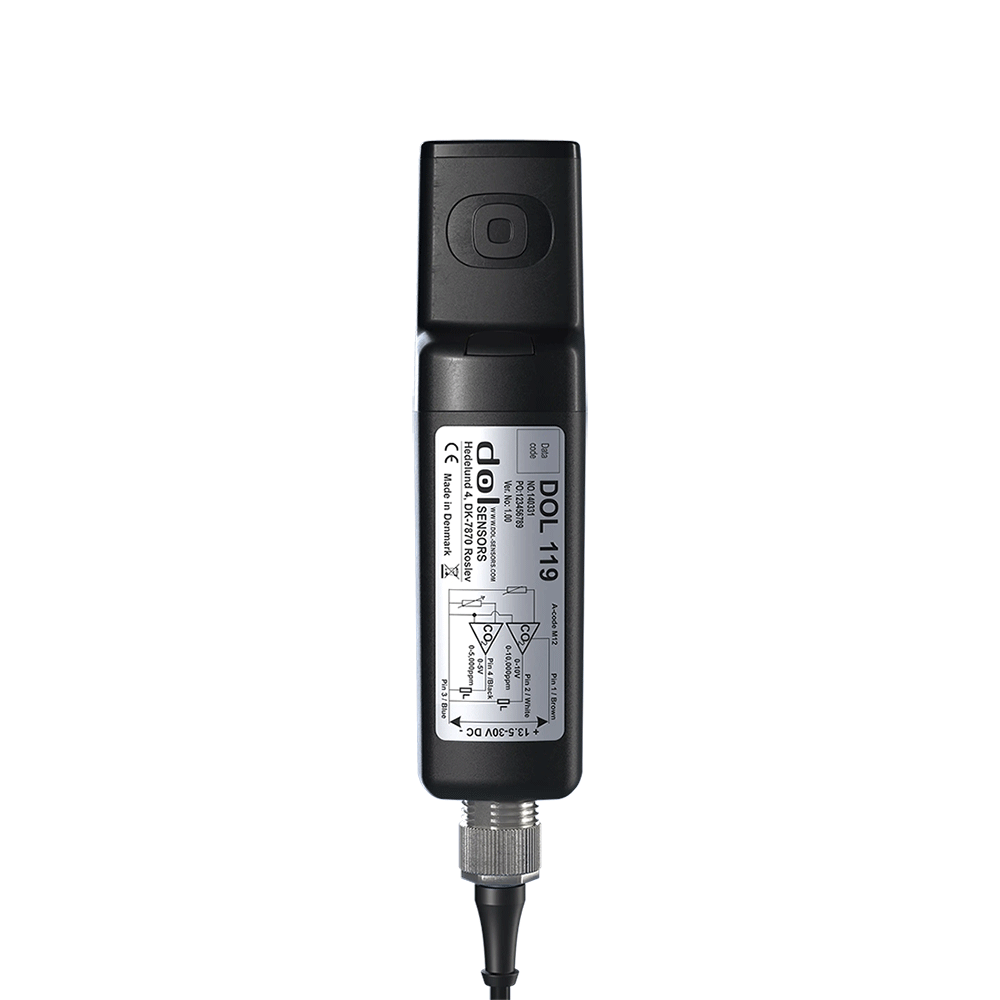
For example, the DOL 119 CO₂ Sensor provides insight into ventilation performance and indoor air quality, while the DOL 114 Humidity & Temperature Sensor helps monitor environmental conditions that influence animal welfare and productivity.

For producers seeking a broader environmental overview, the DOL 139 combines temperature, humidity, and CO₂ monitoring in a single sensor.

Production indicators are just as important. The DOL 90 Water Meter continuously monitors water consumption, often one of the earliest signs that something within the livestock house has changed. Together, these measurements provide valuable information that supports daily management decisions.

Selected Sensors

Documents

English
Leaflet
Climate brochure Pig
English
Leaflet
DOL 119 One pager

Join our newsletter

Stay ahead in livestock production.

Join our newsletter and get industry insights, expert perspectives, and practical strategies for optimizing performance and efficiency.