You Can't Be Everywhere at Once: Why CO₂ Monitoring Matters in Modern Poultry Production

Experience and daily observation remain at the heart of successful poultry production.

Experienced producers can often spot changes in flock behavior, identify environmental issues, and respond quickly to developing challenges. However, modern poultry houses are becoming increasingly complex, making it difficult to rely solely on what can be seen, heard, or physically observed.

Some of the most important indicators of house conditions are simply invisible.

Carbon dioxide (CO₂) is one example.

Although birds and farm staff cannot see CO₂ levels, this parameter can provide valuable insight into ventilation performance, air quality, and overall environmental conditions inside the poultry house.

What Can CO₂ Tell Us?

Carbon dioxide is naturally produced by both birds and heating systems. As a result, CO₂ levels continuously change throughout the day depending on factors such as flock size, bird age, ventilation rates, and outdoor conditions.

When ventilation is functioning effectively, fresh air replaces stale air, helping maintain a healthy indoor environment.

However, if ventilation becomes insufficient, CO₂ levels may begin to rise.

This makes CO₂ an important indicator for evaluating whether air exchange rates are meeting the needs of the flock.

Monitoring CO₂ can help producers identify:

  • Ventilation inefficiencies
  • Changes in indoor air quality
  • Seasonal ventilation challenges
  • Potential environmental stressors
  • Opportunities to optimize climate control

While CO₂ alone does not tell the whole story, it provides valuable information that may not be apparent through visual observation alone.

Why CO₂ Monitoring Matters
CO₂ monitoring provides valuable insight into ventilation performance, helping producers maintain optimal house conditions.
→ Read:
CO2 Sensors

The Challenge of Managing Modern Poultry Houses

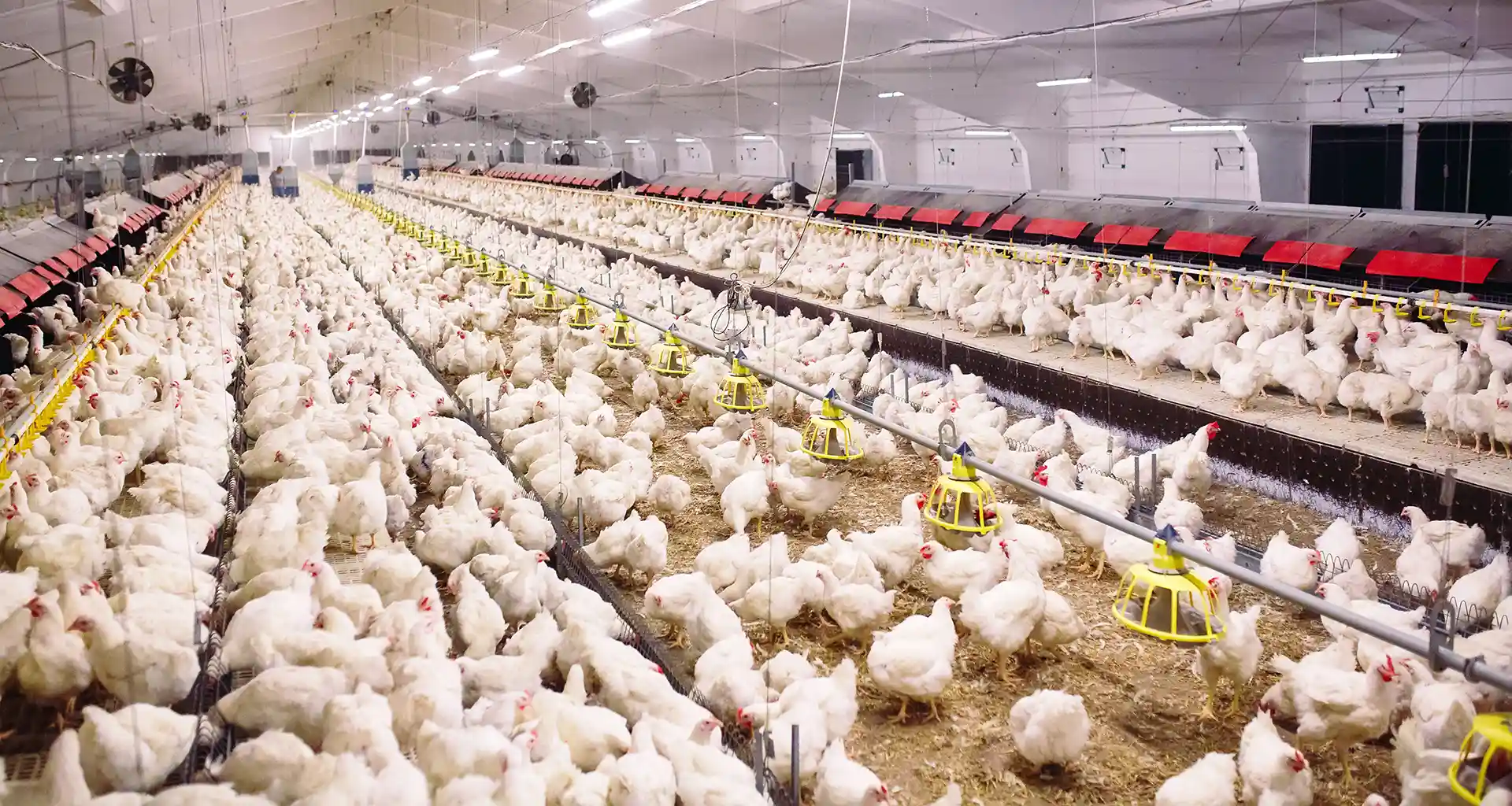
Today's poultry facilities can house tens of thousands of birds within a single building - even with regular inspections, it is impossible to continuously monitor every environmental condition throughout the day and night.

A poultry house may appear normal during a routine walkthrough while environmental parameters gradually shift outside their optimal range. This is where technology can provide valuable support.

Continuous monitoring allows producers to track environmental conditions around the clock and identify trends that might otherwise go unnoticed. Rather than replacing experience, monitoring systems provide additional information that helps support decision-making.

Better Ventilation Starts with Better Visibility

Ventilation management is a balancing act.

Producers must maintain air quality, control temperature and humidity, and support bird comfort while also considering energy consumption and changing outdoor conditions. Without accurate environmental data, these decisions become significantly more difficult. CO₂ monitoring provides objective insight into how effectively fresh air is moving through the house and whether ventilation settings are delivering the desired results. This additional visibility can help producers make more informed adjustments and respond more confidently to changing conditions.

→ Read: Automated Climate and Ventilation in Poultry

The Role of Continuous CO₂ Monitoring

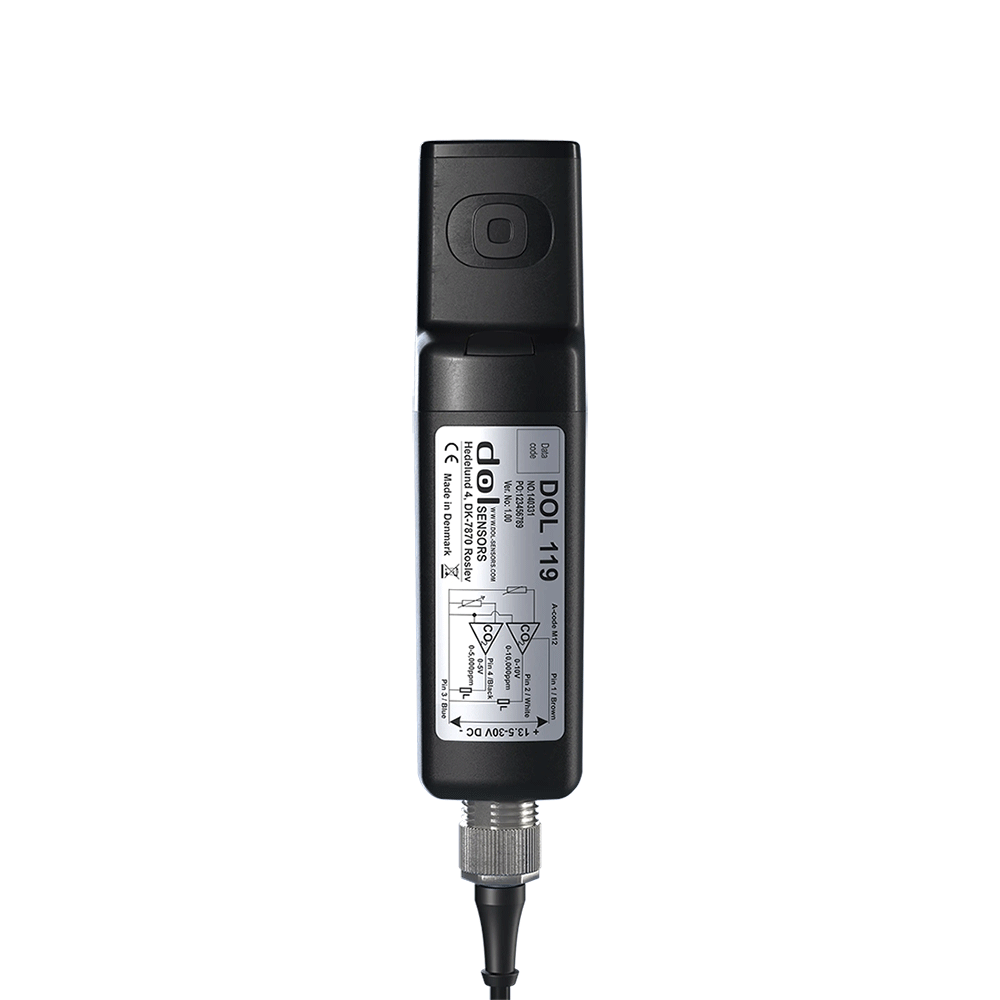
The DOL 119 CO₂ Sensor is designed to provide accurate, continuous monitoring of carbon dioxide levels in livestock houses.

By delivering real-time measurements, the sensor helps producers gain deeper insight into ventilation performance and indoor air quality.

When combined with other environmental data, CO₂ monitoring can support a more comprehensive understanding of house conditions and contribute to more effective climate management. The goal is not simply to collect environmental data. The goal is to transform that data into actionable insight that supports better decisions and improved flock conditions.

Technology Enhances Expertise

Successful poultry production will always depend on knowledge, experience, and attention to detail.

Technology does not replace these qualities.

Instead, it provides producers with additional tools to better understand what is happening inside the house, even when changes are not immediately visible.

Because no matter how experienced you are, you cannot be everywhere at once.

But with continuous monitoring, you can gain visibility into the environmental conditions that matter most.

CO2 Sensors
Learn how continuous monitoring helps producers identify developing production challenges through changes in water consumption, growth performance and other key production indicators.

CO2 Sensors For Better Animal Welfare

Keeping a low level of CO2 (carbon dioxide) is vital to agricultural production and animal welfare. In poultry and pig farms, a too high CO2 level can cause higher feed consdumption rates and higher mortality, thus impacting the performance of the production significantly and lower profits for farmers and farm managers.

Carbon dioxide accumilation in the barn, can cause respiratory problems and even death, which means that monitoring the CO2 level is vital to the production. Controlling the ventilation and eliminating CO2 in the house is one of the most important factors in poultry and pig production.

In addition, high levels of CO2 can cause stress and discomfort for the animals, leading to aggressive behavior and increased risk of injury. By monitoring the CO2 level and controlling the ventilation, farmers and farm managers can create a more comfortable and healthy environment for their animals, reducing the risk of disease and improving overall welfare.

Climate Sensors Poultry
Learn how continuous monitoring helps producers identify developing production challenges through changes in water consumption, growth performance and other key production indicators.

In many countries around the world, environmental regulations are made in the poultry industry. According to The Poultry Site, poultry producers in Australia must offer environmental enrichment for meat chicken breeders. The guidelines also include changes to the minimum light intensity and required periods of darkness, ventilation, and temperature parameters for all species.

To ensure the required environmental enrichments, farmers and farm managers can take advantage of climate sensors for poultry. These are sensors that are specially designed to with-stand the harsh environment in livestock production, where dust, high humidity, temperature swings, as well as high levels of ammonia can harm the sensors and affect their performance.

Climate sensors for poultry comes in various versions, and can monitor the light intensity, level of humidity, CO2, and ammonia, and the temperature. In combination with a farm controller these climate sensors can help the farmer and farm manager controlling the ventilation system and the amount of light automatically. Furthermore, the data from the sensors can be shared with others for documentation purposes or for analysis.

Vital data from climate sensors in poultry

The data from the sensors is vital to the production. By controlling the ventilation system and light intensity automatically, the farmer or farm manager has full control of the environment and thus the animals’ welfare. In poultry, the light intensity can have a huge impact on how the animals grow, the FCR (Feed Consumption Rate), and egg laying.

The temperature is also an important factor in poultry production. A too low temperature will increase the mortality and make the birds clutch together to keep warm. They will most likely start eating more without gaining any weight due to the energy they use to keep warm.

During their life cycle, chickens require different temperatures. This is why an automatic regulation of the temperature is crusial.

Five Practical Ways to Strengthen Bird Welfare in Modern Poultry Production
Learn how continuous monitoring helps producers identify developing production challenges through changes in water consumption, growth performance and other key production indicators.

Improving bird welfare doesn’t always require major changes - often, the biggest gains come from understanding how the barn environment shapes behavior, health, and performance. With better climate control, smarter monitoring, and thoughtful management, producers can create conditions where birds stay healthier, more active, and more uniform.

1. Keep Airflow Consistent from Day One

Young birds depend on fresh air just as much as warmth. When ventilation is too limited, CO₂ rises quickly, oxygen drops, and chicks become inactive, eat less, and grow unevenly. Opening inlets early and ensuring steady airflow helps distribute heat, reduce moisture, and maintain a healthier environment. Even in winter, controlled ventilation supports stronger starts and better long‑term performance.

2. Use Enrichment Strategically - and rotate it

Birds are naturally curious and motivated to forage, scratch, and peck. Enrichment items like straw bales, pecking blocks, or ramps help direct this behavior in positive ways. But enrichment only works when it stays interesting. Rotating items, adjusting placement, and choosing tools that match the flock’s needs - such as promoting activity in heavier birds - helps maintain engagement and reduce unwanted behaviors like feather pecking.

3. Support Gut Health from the Beginning

A healthy digestive system is the foundation for growth, immunity, and feed efficiency. Early-life challenges - humidity, litter moisture, coccidiosis pressure - can disrupt gut function and lead to long-term performance losses. Working with nutrition and veterinary teams to support gut health from placement onward helps birds absorb nutrients better, maintain stronger immunity, and stay on track throughout the cycle.

Selected Sensors

Documents

English
Leaflet
DOL 119 One pager
English
Leaflet
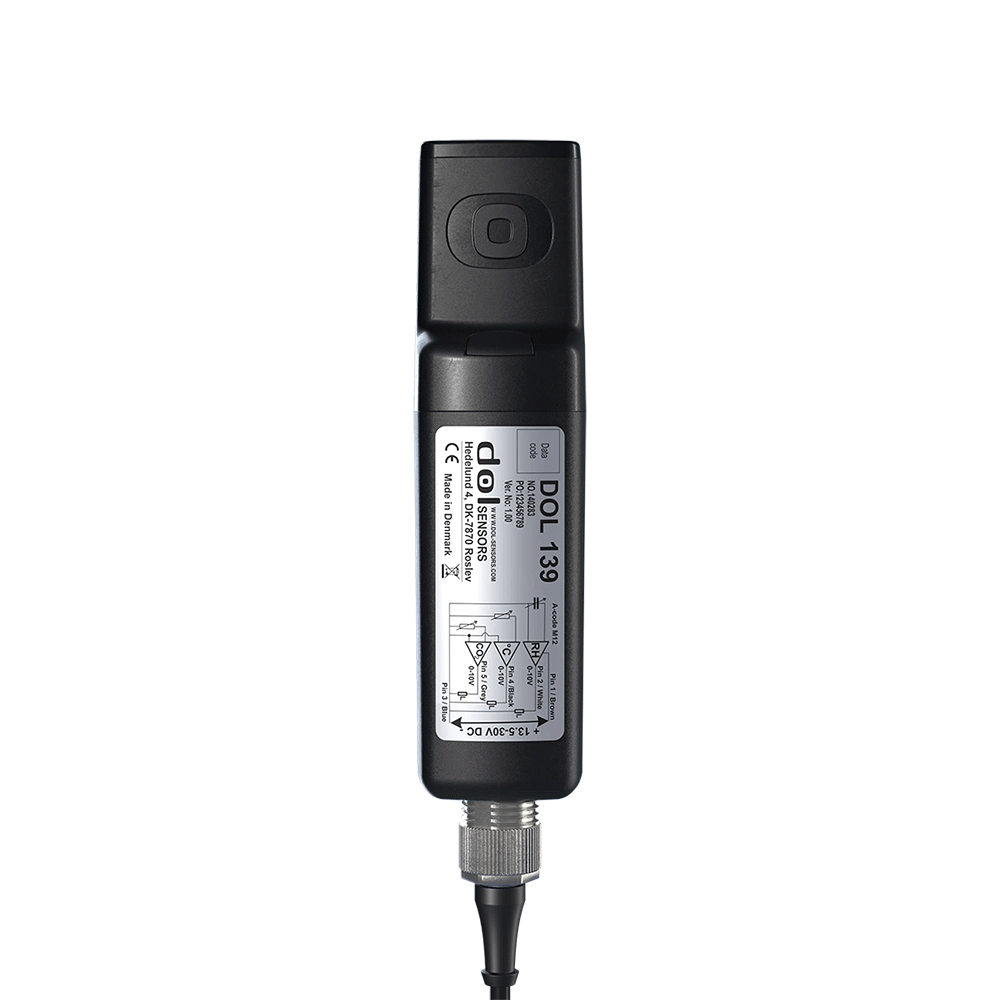
DOL 139 Humidity, Temperature and CO2 Sensor
English
Leaflet
Corporate Brochure Poultry

Join our newsletter

Stay ahead in livestock production.

Join our newsletter and get industry insights, expert perspectives, and practical strategies for optimizing performance and efficiency.